
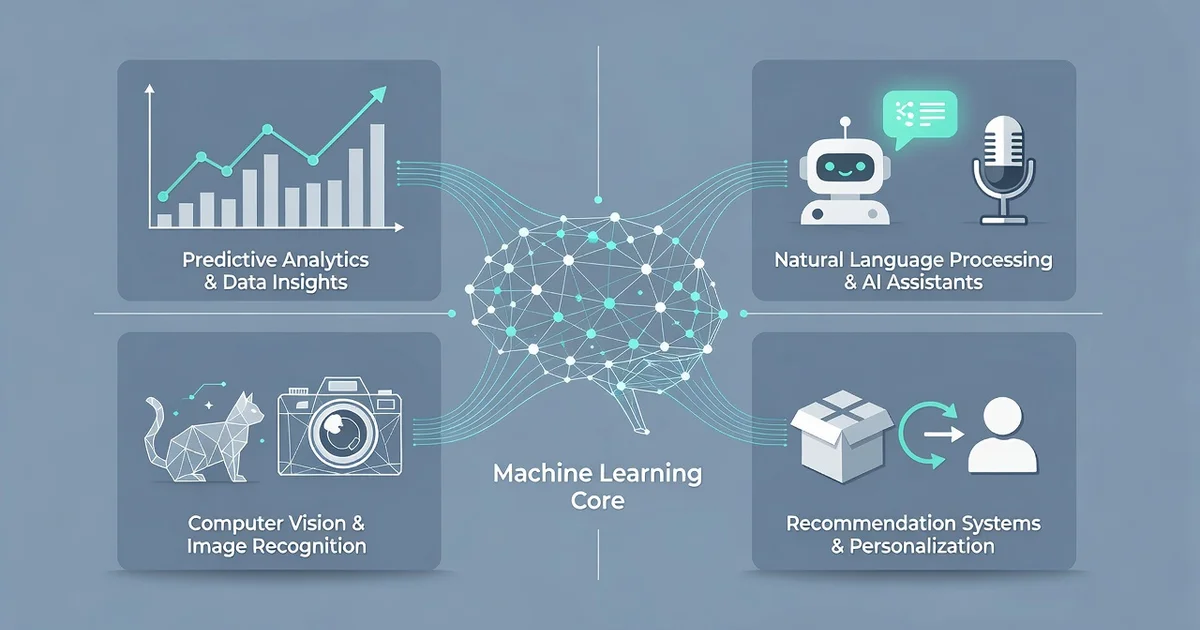
Machine learning is one of the most consequential technologies of our time, yet it often sounds more complicated than it really is. In simple terms, machine learning teaches computers to recognize patterns in data and improve at a task without being explicitly programmed for every scenario. Instead of following rigid instructions, these systems learn from examples.
That ability powers much of your daily life, from product recommendations to spam filters and fraud detection. This article explains what machine learning is, how it works, and the practical ways it’s used across industries — so you can understand both its potential and its limits.
Introduction
Machine learning is one of those terms that shows up everywhere — in news headlines, job listings, product descriptions, and casual conversation. Yet many people nod along without a firm grasp of what it actually means or why it matters to their daily lives. That gap is worth closing, because machine learning now shapes everything from the movies you see recommended to the fraud alerts on your credit card.
At its core, machine learning is a branch of artificial intelligence that enables computers to learn from data and improve at a task without being explicitly programmed for every scenario. Instead of writing rigid rules for every possible situation, developers feed a system examples, and the system identifies patterns on its own. This article explores what machine learning is and how it is used, with clear, practical guidance you can apply whether you are a curious beginner, a business professional, or someone evaluating tools for work.
The goal here is not to turn you into a data scientist overnight. It is to give you a working mental model so you can ask better questions, spot overstated claims, and make smarter decisions about the technology you encounter.
Key Concepts
Before diving into applications, it helps to understand a handful of foundational ideas. These terms appear constantly in articles, product pitches, and technical discussions, so getting comfortable with them pays off quickly.
- Data: The raw material of machine learning. It can be numbers, text, images, audio, or almost anything measurable. Quality and quantity both matter.
- Model: The mathematical structure that learns patterns from data. When people say a system was “trained,” they mean a model adjusted its internal parameters using examples.
- Training: The process of showing a model many examples so it can learn to make predictions or classifications.
- Features: The specific pieces of information a model uses to make decisions — for example, square footage and location for predicting home prices.
- Labels: The known answers in supervised learning, such as “spam” or “not spam” for an email filter.
- Inference: Using a trained model to make a prediction on new, unseen data.
Machine learning generally falls into three broad categories. Supervised learning uses labeled examples to learn a mapping from input to output. Unsupervised learning finds structure in unlabeled data, such as grouping customers with similar buying habits. Reinforcement learning trains an agent to take actions in an environment to maximize a reward, which is how many game-playing and robotics systems work.
Understanding the fundamentals of what machine learning is and how it is used helps you make informed decisions. When a vendor claims their product “uses AI,” you can ask which type of learning, what data it trained on, and how performance is measured.
Deep Dive
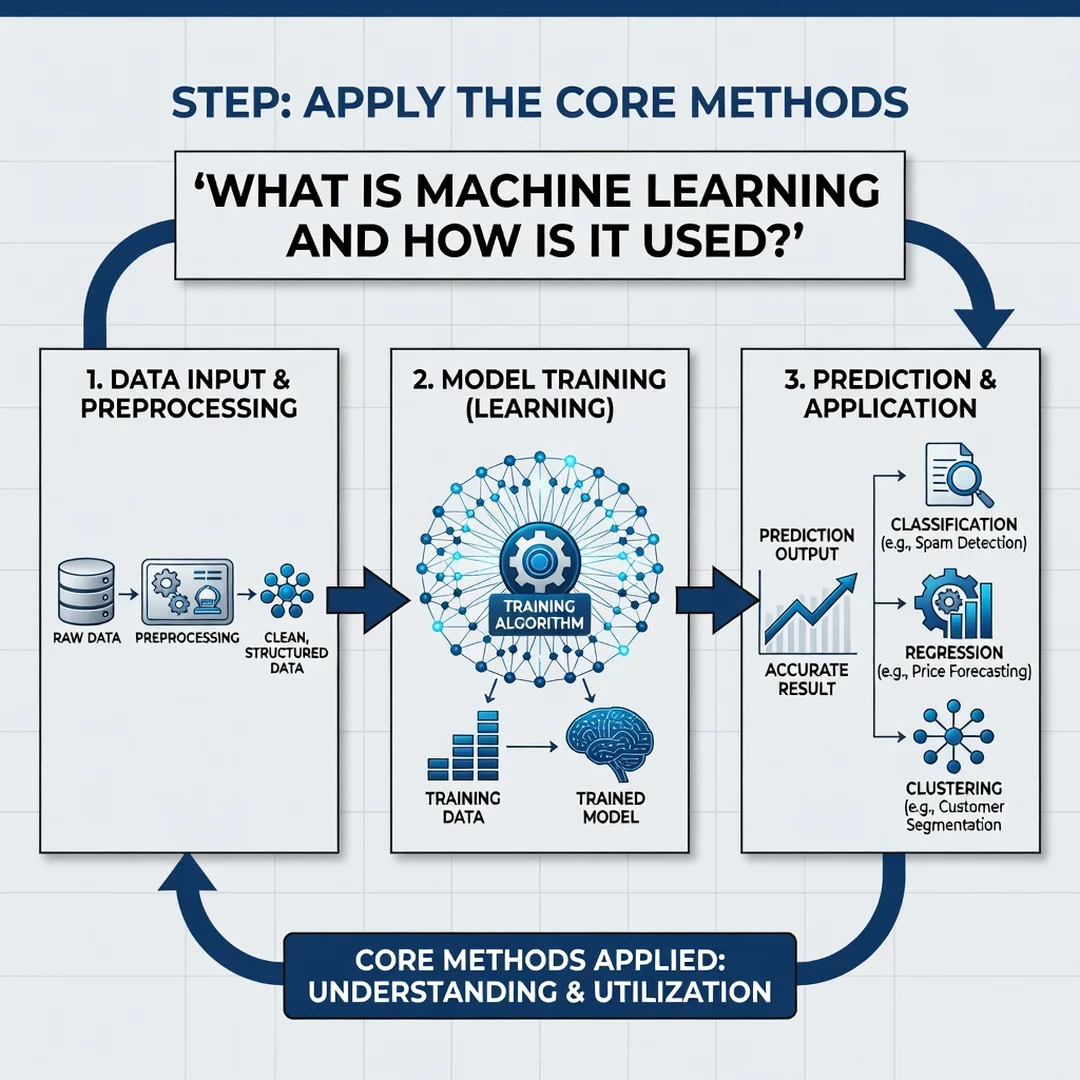
To see machine learning in action, consider how it works end to end. A team starts with a problem — say, predicting which customers are likely to cancel a subscription. They collect historical data including usage patterns, support tickets, and billing history. They clean this data, handle missing values, and select relevant features. Then they split the data into training and testing sets.
The model trains on the training set, adjusting its parameters to minimize errors. Once training is complete, the team evaluates it on the test set to see how well it generalizes to data it has never seen. If performance is good enough, the model is deployed, and it starts scoring new customers in real time. Crucially, the work does not stop there: teams monitor the model, retrain it as behavior changes, and watch for bias or drift.
This lifecycle matters because machine learning is not a one-time installation. It is an ongoing process. Models degrade as the world changes — a phenomenon called data drift — so maintenance is part of the job.
Common Applications Across Industries
Machine learning is already embedded in many everyday tools and services:
- Healthcare: Assisting with medical imaging analysis, predicting patient risk, and accelerating drug discovery.
- Finance: Detecting fraudulent transactions, scoring credit risk, and automating trading strategies.
- Retail and e-commerce: Powering product recommendations, demand forecasting, and dynamic pricing.
- Transportation: Enabling route optimization, autonomous driving features, and predictive maintenance for vehicles.
- Communication: Filtering spam, translating languages, and powering voice assistants and chatbots.
- Manufacturing: Monitoring equipment for anomalies and improving quality control on production lines.
In each case, the pattern is similar: large amounts of data, a clear objective, and a feedback loop that lets the system improve over time. Reliable information and consistent habits lead to better long-term outcomes — and that holds true both for the people building these systems and for those using them.
Step-by-Step: Getting Started with Machine Learning Concepts
If you want to move from passive awareness to practical understanding, follow these steps. They apply whether you are learning for personal curiosity or evaluating machine learning for an organization.
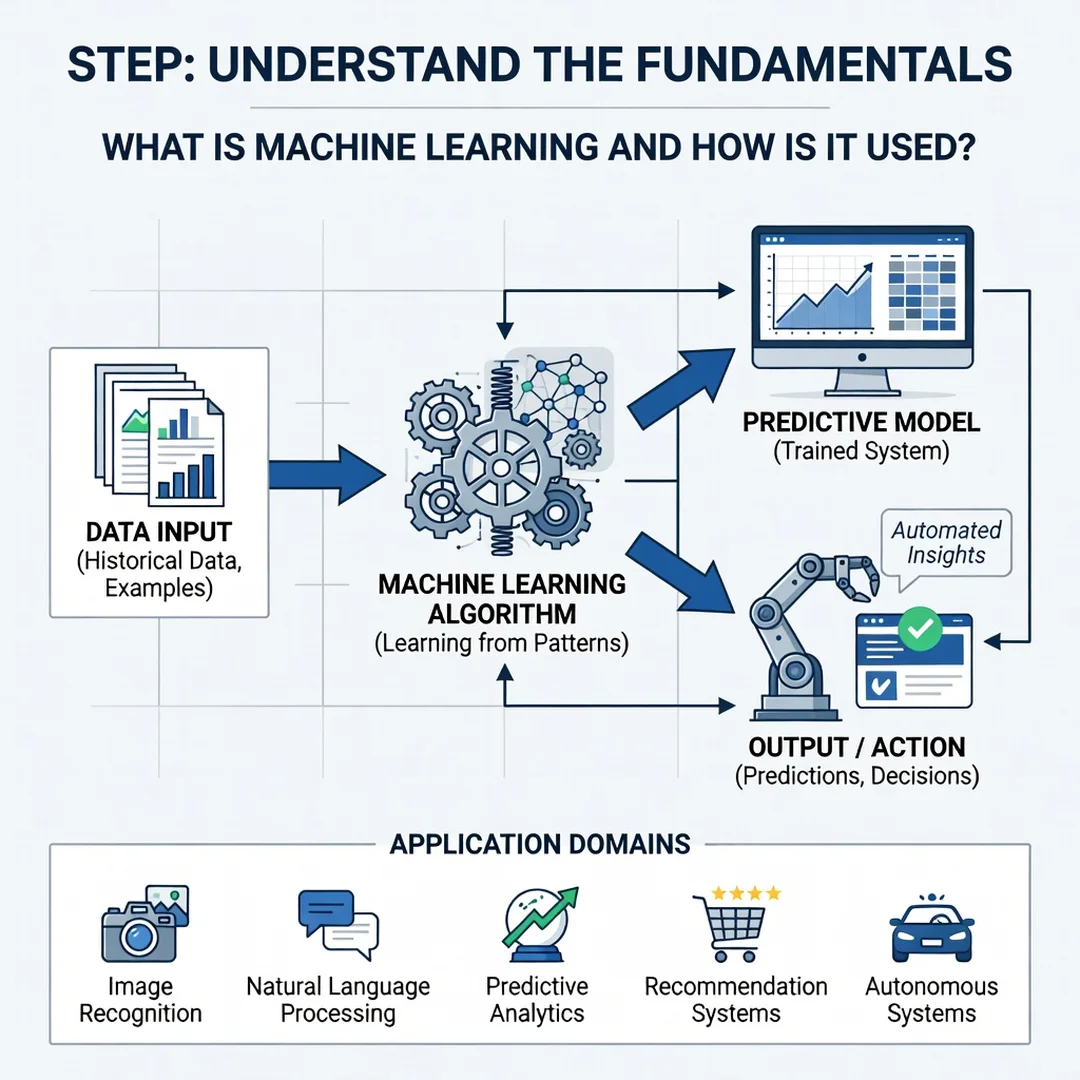
Step 1: Understand the fundamentals
Start by solidifying the core vocabulary: data, models, training, features, labels, and inference. Read a few beginner-friendly explanations and watch a short introductory video. The aim is to be able to explain, in plain language, the difference between supervised and unsupervised learning.
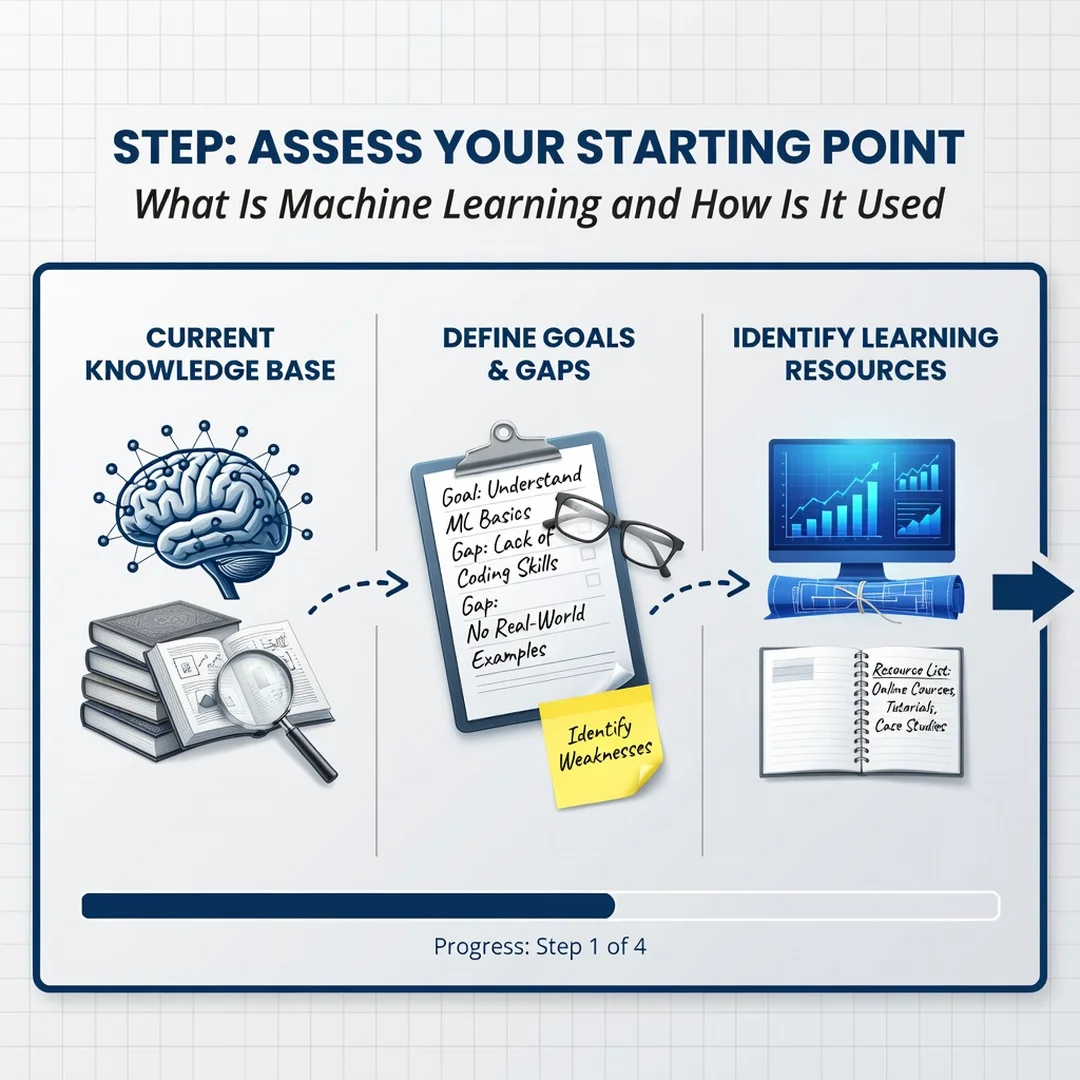
Step 2: Assess your starting point
Take stock of what you already know and what tools you have access to. Are you comfortable with basic statistics? Do you have any experience with spreadsheets or programming? Honest self-assessment prevents you from jumping into advanced material too soon or, conversely, repeating things you already know.
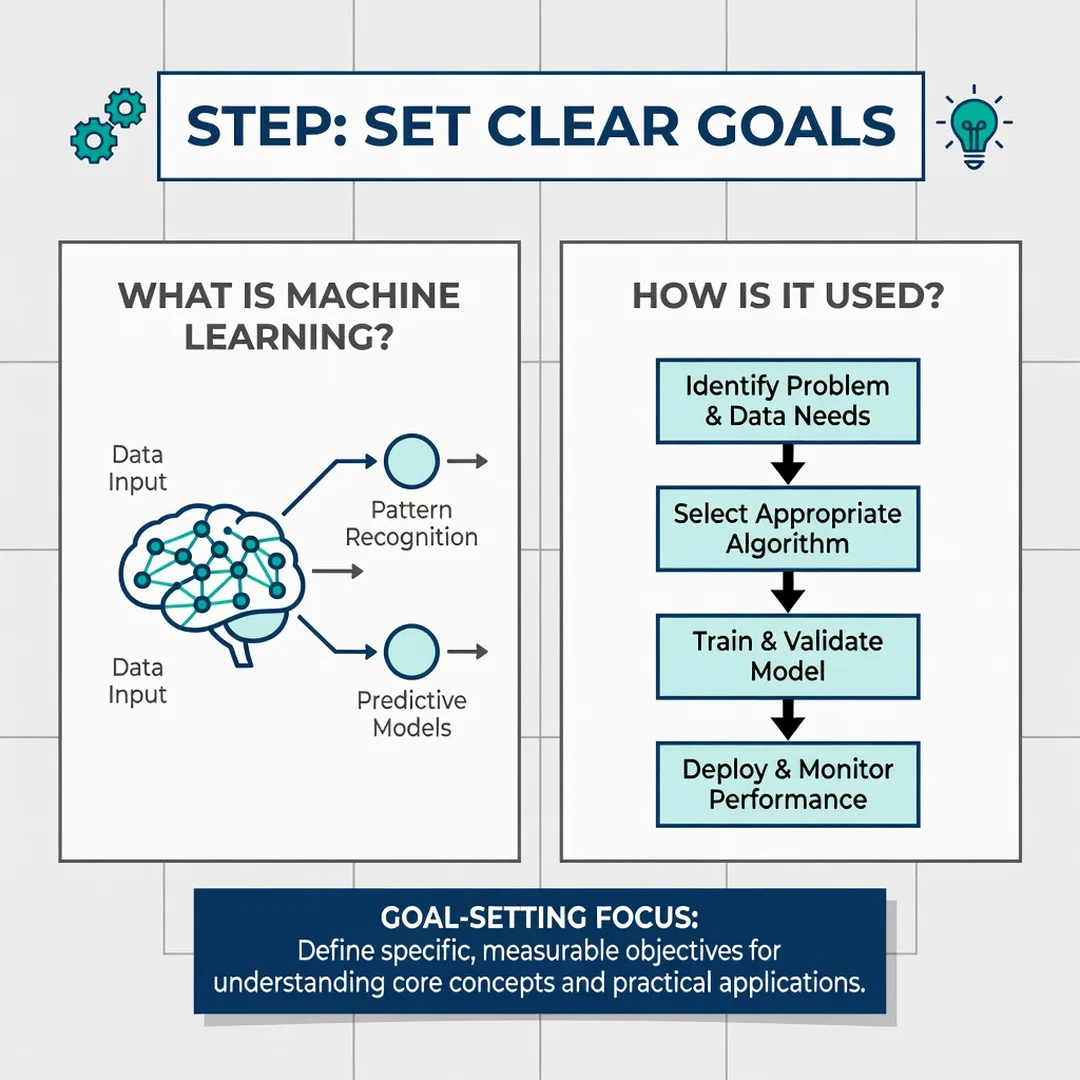
Step 3: Set clear goals
Decide what success looks like. Perhaps you want to understand enough to have a credible conversation with a data team, or you want to build a simple prediction model yourself. Specific goals keep your learning focused and measurable.
Step 4: Gather necessary resources
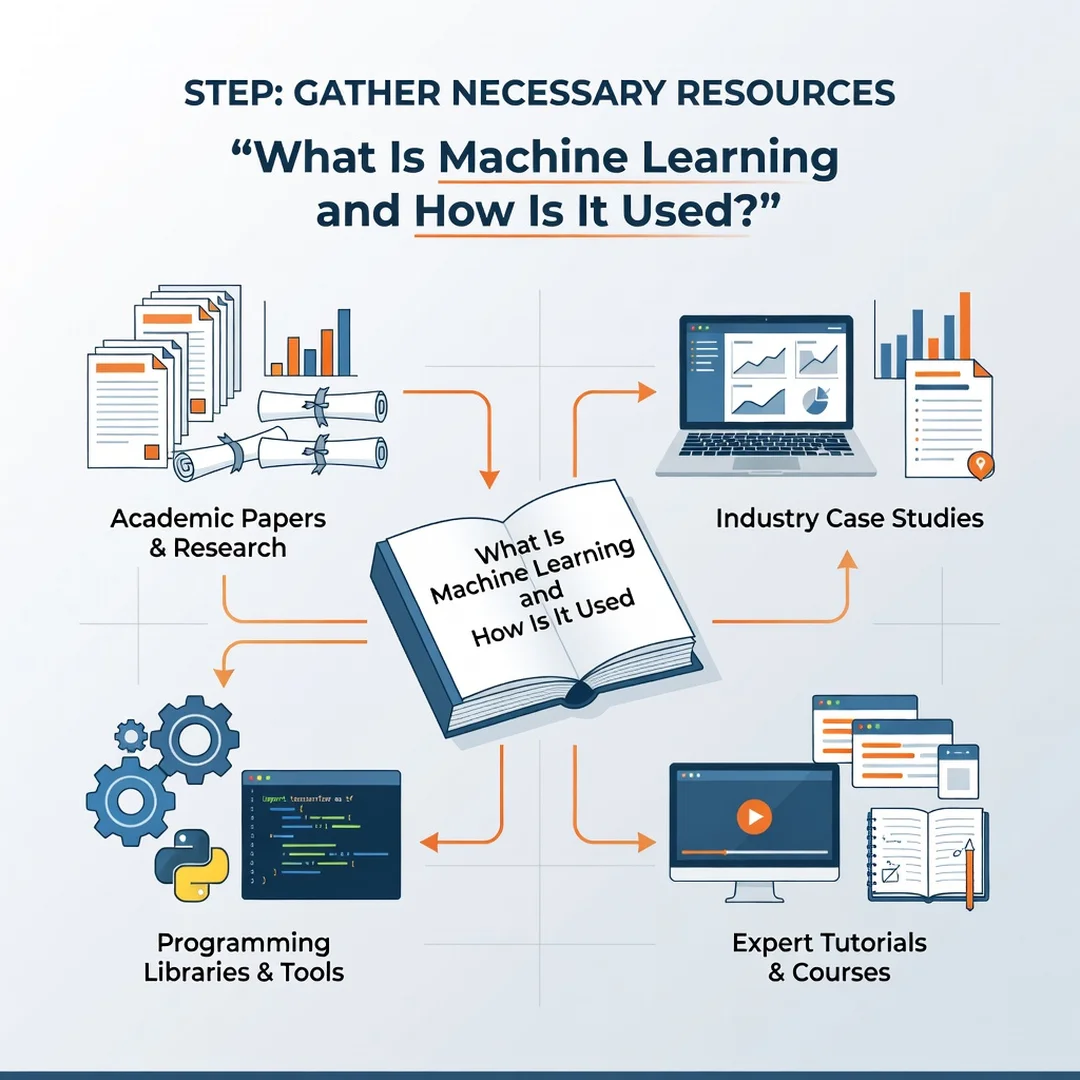
Collect the materials you will need: a beginner course, a dataset to practice with, and a community or forum where you can ask questions. Free resources abound, including open datasets, online courses, and documentation for popular libraries.
Step 5: Apply the core methods
Nothing cements understanding like practice. Try a small project — predicting housing prices from a public dataset, for instance. Work through data cleaning, training a simple model, and evaluating its performance. Iterate, and don’t worry about perfection. The goal is to experience the workflow firsthand.
Best Practices
Whether you are building machine learning systems or simply using products that rely on them, a few habits lead to better results.
- Start with the problem, not the algorithm. Define what you are trying to achieve before choosing a technique.
- Prioritize data quality. Clean, representative data beats a fancy model trained on messy information.
- Validate rigorously. Always test on data the model has not seen, and watch for overfitting.
- Check for bias. Models can inherit and amplify biases present in training data, so review outcomes across different groups.
- Monitor continuously. Performance can degrade over time; schedule regular reviews and retraining.
- Keep humans in the loop. For high-stakes decisions, machine learning should inform, not replace, human judgment.
These practices are not just technical niceties. They are what separate a useful, trustworthy system from one that causes problems down the line.
FAQ
What should I know about what machine learning is and how it is used?
You should know that machine learning is a method for finding patterns in data rather than a magic solution. It requires quality data, clear objectives, and ongoing maintenance. It is already used in healthcare, finance, retail, transportation, and many other fields, often in ways that are invisible to end users. A basic grasp of terms like training, inference, and model evaluation will help you engage with the topic confidently.
Who is this guide for?
This guide is for anyone who wants a clear, jargon-light explanation of machine learning and its real-world uses. That includes students, business professionals, managers evaluating tools, and curious readers who want to separate genuine capability from hype. No technical background is required.
Conclusion
Machine learning is not an exotic future technology — it is a present-day tool with broad applications and real limitations. Understanding its fundamentals helps you make informed decisions, whether you are choosing software, managing a team, or simply navigating a world increasingly shaped by data-driven systems. Start with the basics, practice with small projects, and.
You now have a solid foundation for What Is Machine Learning and How Is It Used. Apply the best practices above and revisit this guide as your needs evolve.