

Technology is moving faster than ever, and the choices you make today can shape your opportunities tomorrow. From artificial intelligence to quantum computing, emerging technology trends are rewriting how we work, communicate, and build businesses.
In this article, we break down the innovations that matter most right now—and explain what each one means for you. No jargon, no hype. Just clear insights you can use to stay ahead of the curve and make smarter decisions in a rapidly changing digital world.
Introduction
Emerging technology trends are reshaping how people work, learn, shop, and connect. Each new wave—artificial intelligence, edge computing, extended reality, and advanced connectivity—builds on the last, making the digital landscape more capable and more complex at the same time. This article explores Emerging Technology Trends Shaping the Digital Future with clear, practical guidance, so you can separate durable shifts from short-lived hype and act on what matters.
The changes are not confined to technology companies. Cloud platforms, generative AI tools, and connected devices now influence nearly every industry, from healthcare to agriculture to retail. Understanding the fundamentals of Emerging Technology Trends Shaping the Digital Future helps you make informed decisions, whether you are choosing tools for a small team, planning a career move, or simply trying to stay current.
Key Concepts
Before adopting any new technology, it helps to define the terms clearly. The following concepts appear constantly in headlines and vendor pitches, and knowing what they actually mean prevents confusion.
- Artificial intelligence and machine learning: Systems that learn patterns from data to make predictions, generate content, or automate decisions. Generative AI, which produces text, images, and code, is the most visible example today.
- Edge computing: Processing data near where it is created—on a device or local server—rather than sending everything to a distant cloud data center. This reduces latency and bandwidth costs, which matters for factories, vehicles, and medical devices.
- Extended reality (XR): An umbrella term for virtual reality, augmented reality, and mixed reality. These tools overlay or replace physical environments and are increasingly used for training, design review, and remote collaboration.
- 5G and next-generation connectivity: Faster, lower-latency networks that make real-time applications practical in more places, from smart cities to precision agriculture.
- Cybersecurity and zero trust: A security model that assumes no user or device is trustworthy by default and verifies every access request. As systems multiply, this approach becomes foundational rather than optional.
Two themes connect these concepts. First, data is the fuel: more sensors and digital services generate more information, which intelligent systems then analyze. Second, convergence matters: the biggest impact often comes when several technologies combine, such as AI running on edge devices over a 5G connection.
Deep Dive
Individually, these trends are interesting. Together, they change what organizations and individuals can realistically do.
AI moves from experiment to infrastructure
AI is shifting from isolated pilot projects to core infrastructure. Customer service assistants, coding copilots, and document summarizers are becoming standard features rather than novelties. The practical question is no longer whether to use AI, but where it adds measurable value and where human judgment must remain in the loop. Organizations that document their use cases, measure outcomes, and review outputs tend to get better results than those that adopt tools indiscriminately.
Edge computing reshapes where work happens
When processing happens closer to the source, applications respond faster and consume less bandwidth. A retail store can analyze video locally without streaming footage to the cloud; a farm can adjust irrigation based on sensor readings in the field. For planners, this means revisiting assumptions about architecture, cost, and privacy. Data that never leaves a site is easier to protect, but it also requires new skills to manage distributed systems.
Extended reality becomes practical
XR has moved beyond entertainment into hands-on training, equipment maintenance, and remote assistance. A technician wearing smart glasses can receive guidance from an expert hundreds of miles away. These use cases succeed when the hardware is comfortable, the software is reliable, and the workflow is genuinely improved—not merely digitized for its own sake.
Security and trust underpin everything
Every new capability expands the attack surface. Connected devices, third-party AI services, and remote work all introduce risk. Zero-trust principles, regular patching, and clear data governance are no longer back-office concerns; they are prerequisites for adopting anything new. Reliable information and consistent habits lead to better long-term outcomes, and this is especially true in security, where discipline beats one-time fixes.
Best Practices
You do not need a large budget or a dedicated research team to engage with these trends responsibly. The following habits help individuals and organizations stay grounded.
- Start with a problem, not a product. Define the outcome you want—faster onboarding, lower downtime, better customer response—before evaluating tools.
- Pilot small and measure. Run a limited trial with clear success criteria, then decide whether to expand, adjust, or stop.
- Invest in literacy. Basic understanding of data, privacy, and AI limitations across a team reduces risk and improves adoption.
- Prioritize interoperability. Choose tools that integrate with what you already use, so you avoid fragile, disconnected workflows.
- Review security continuously. Treat access controls, updates, and backups as ongoing routines rather than annual projects.
- Follow credible sources. Vendor blogs, standards bodies, and independent analysts each have a perspective; triangulate before committing.
Step-by-Step: Putting Emerging Technology to Work
If you want to apply these trends in a practical way, follow this sequence. It works for a solo professional, a small business, or a team inside a larger organization.
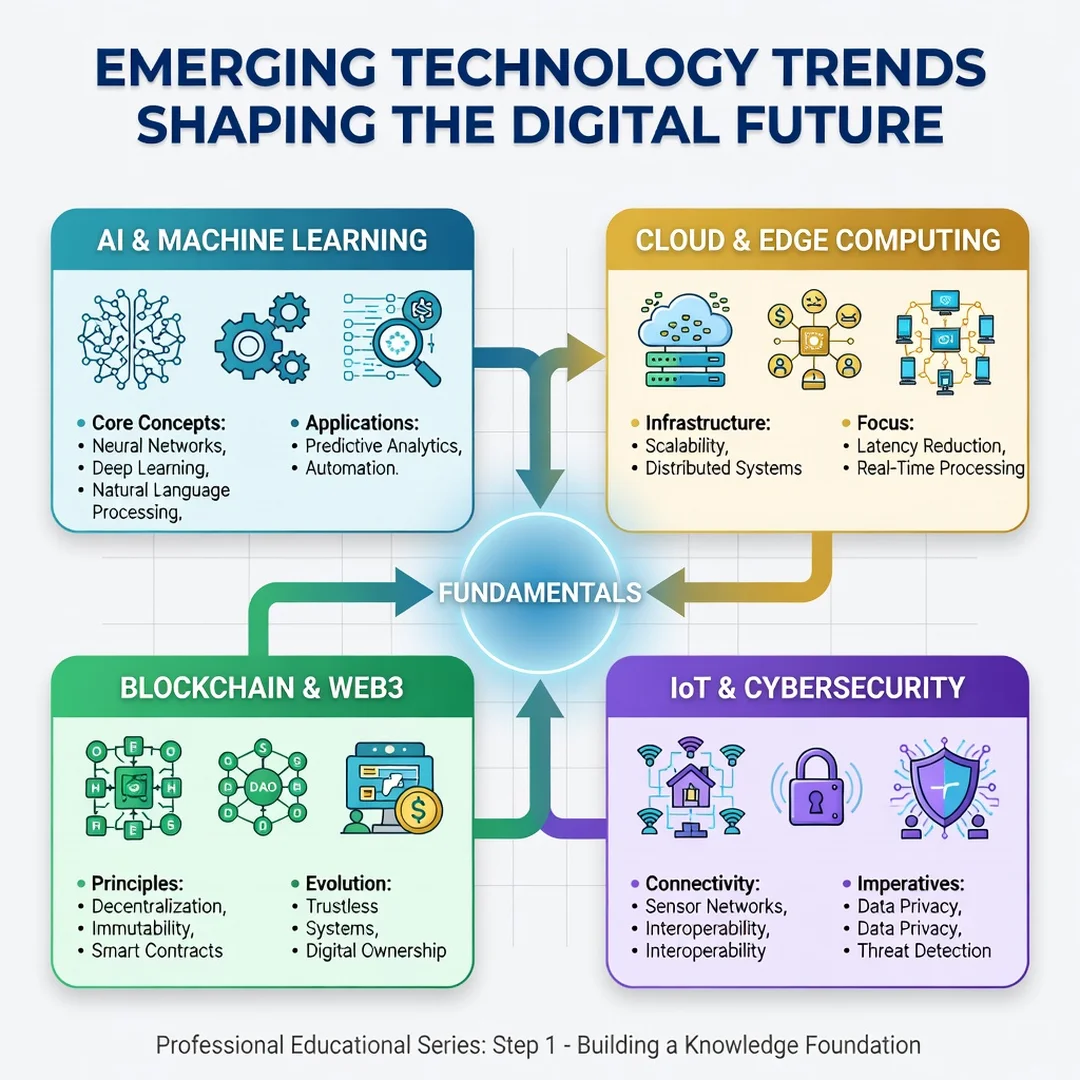
Step 1: Understand the fundamentals
Spend focused time learning what each major trend actually does and where its limits lie. Read introductory material, watch demos, and note the vocabulary. You do not need to become an engineer, but you should be able to explain in plain language what a tool does and what it cannot do.
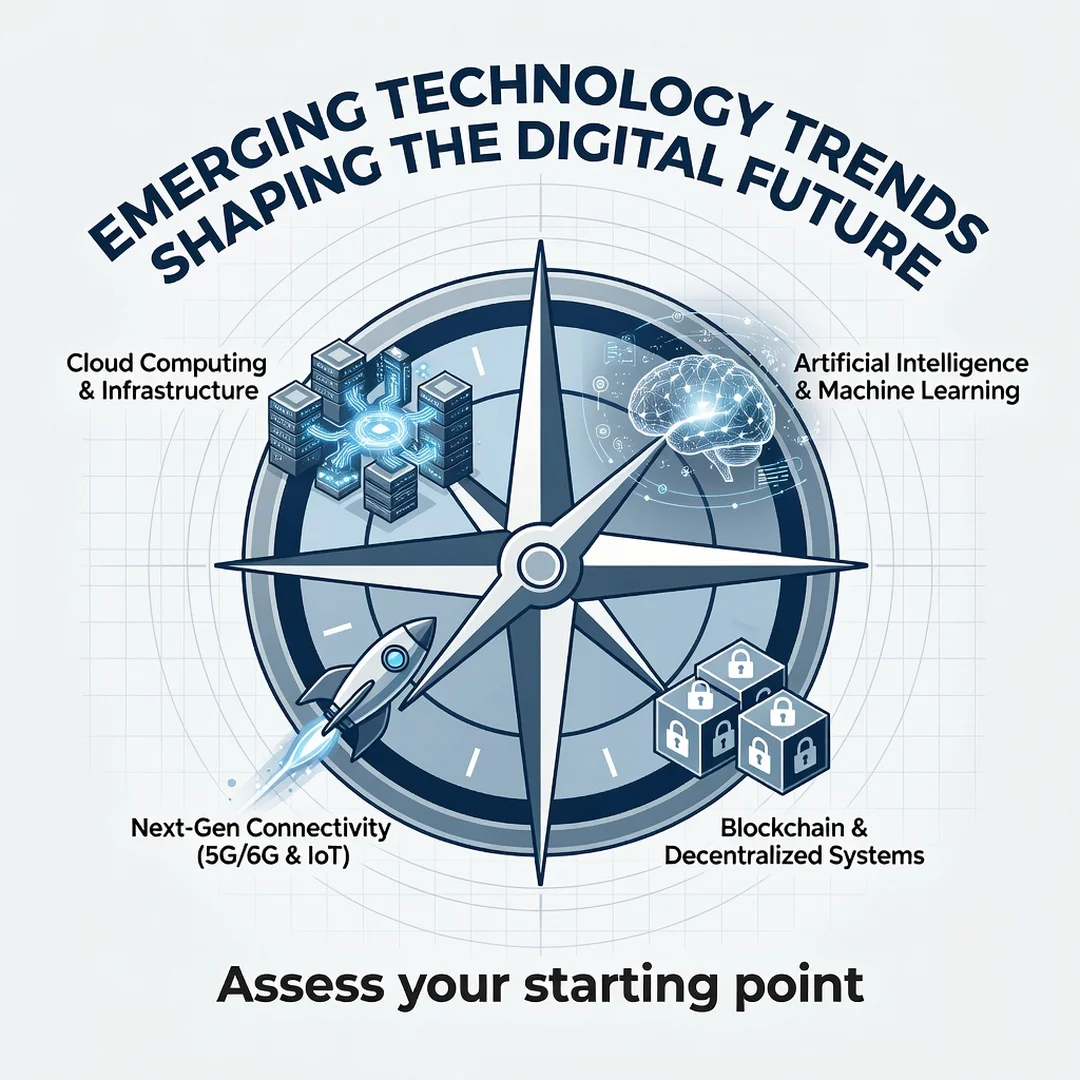
Step 2: Assess your starting point
Audit your current tools, skills, and pain points. Identify where work is slow, repetitive, or error-prone. This baseline reveals which emerging technologies are relevant and which are distractions.
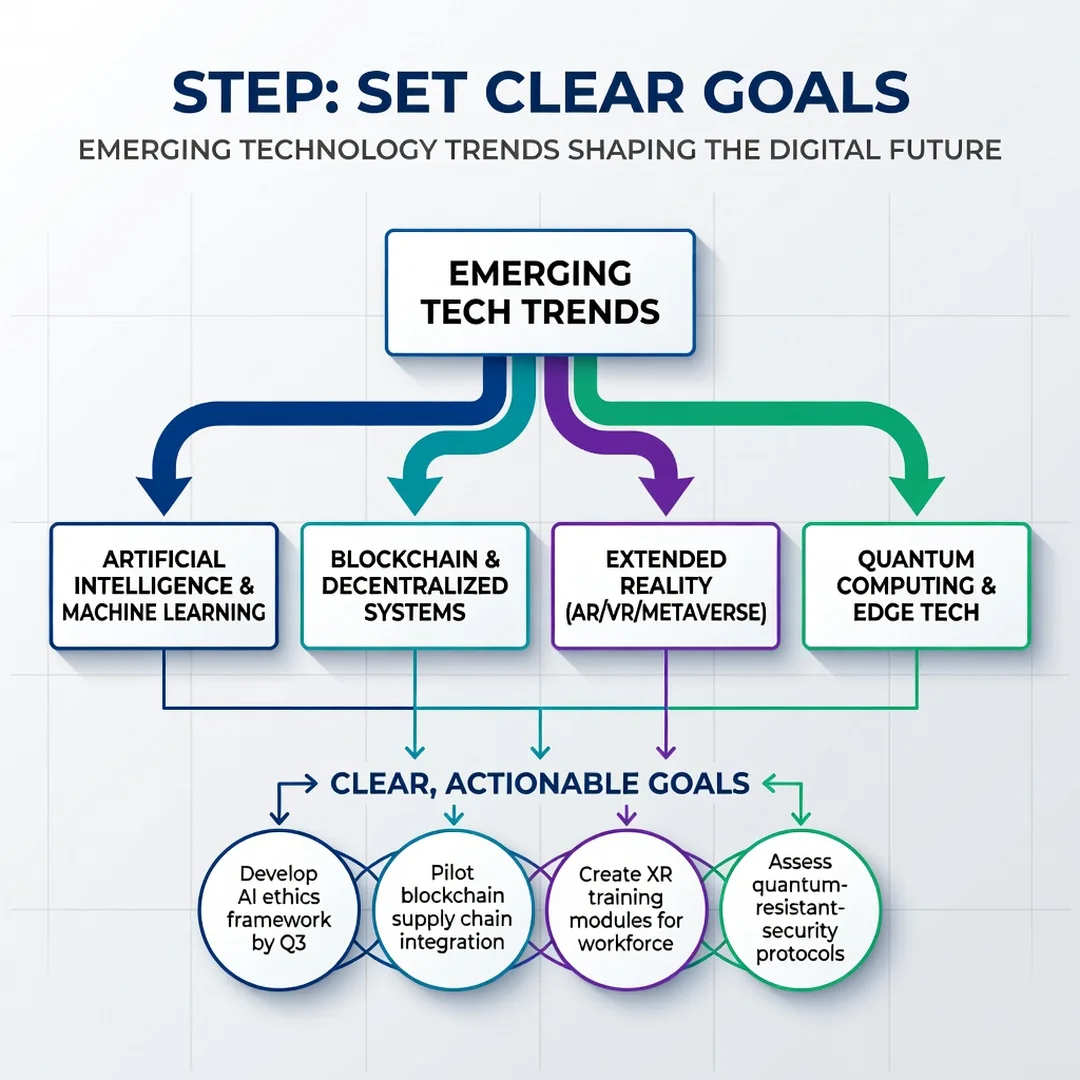
Step 3: Set clear goals
Translate your assessment into specific, measurable objectives. For example: reduce report preparation time by half, cut equipment downtime by 20 percent, or train five staff members on a new platform. Clear goals make it possible to judge success objectively.
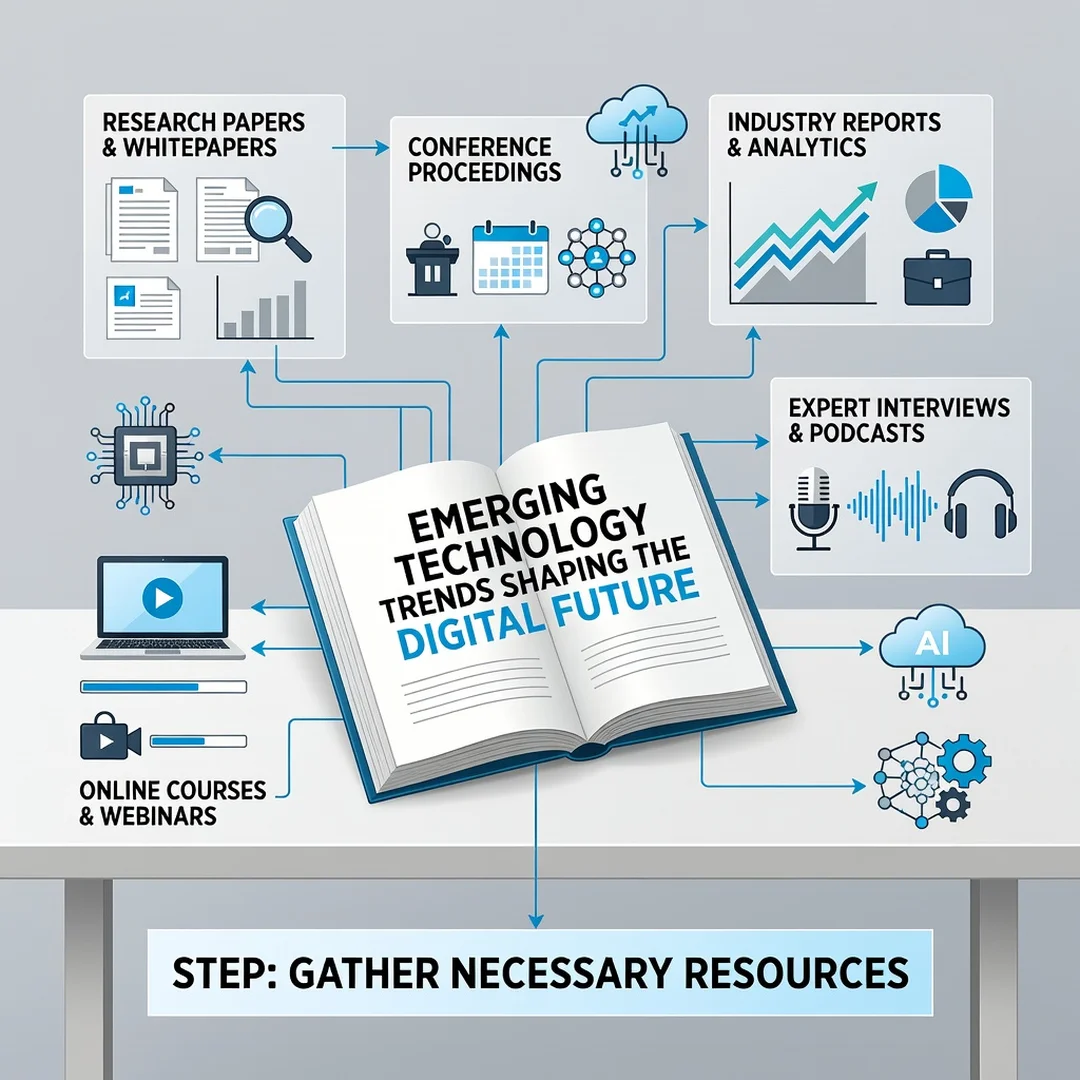
Step 4: Gather necessary resources
Line up the people, budget, data, and training you will need. This may include a pilot license, a small hardware purchase, or simply dedicated time each week. Confirm that privacy and security requirements are understood before you begin.
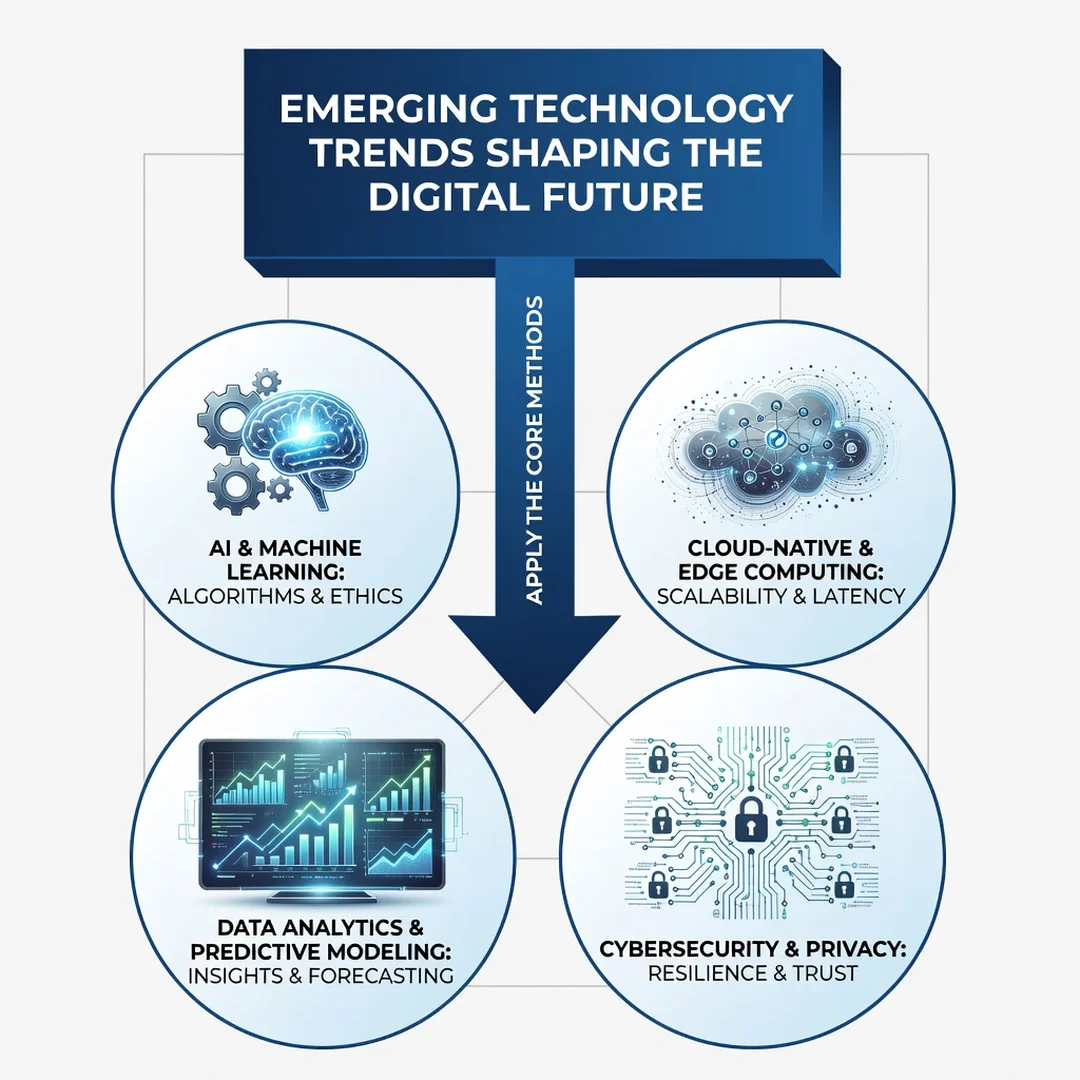
Step 5: Apply the core methods
Run the pilot, collect results, and compare them against your goals. Document what worked and what did not. Then decide whether to scale, refine, or move on. Treat each cycle as a learning opportunity, and keep the habits from the best practices section in place as you grow.
FAQ
What should I know about Emerging Technology Trends Shaping the Digital Future?
Focus on a few trends that affect your actual work rather than trying to track everything. Understand the basics of AI, edge computing, extended reality, connectivity, and security, then connect them to a specific problem you want to solve. The goal is informed decision-making, not exhaustive knowledge.
Who is this guide for?
This guide is for general readers—professionals, small business owners, students, and curious individuals—who want clear, actionable information without deep technical jargon. It assumes no specialist background and prioritizes practical steps over theory.
Do I need to adopt every trend discussed here?
No. Most people and organizations benefit from selectively adopting a small number of technologies that fit their needs. The value is in knowing what exists, what it costs, and how to evaluate it when the right opportunity appears.
How can I avoid wasting time on hype?
Look for evidence of real-world use, measurable outcomes, and sustained adoption over several years. Be cautious of promises that sound too easy, and prefer tools that solve a problem you have already identified.
Conclusion
Emerging technologies are reshaping the digital future, but the most successful adopters are rarely the fastest. They are the ones who understand the fundamentals, assess honestly, set clear goals, and apply new tools to real problems. By following the steps and habits outlined above, you can engage with AI, edge computing, extended reality, and next-generation connectivity in a way that is useful, secure, and sustainable. Reliable information and consistent habits lead to better long-term outcomes—start small, measure carefully, and build from what works.
Frequently Asked Questions
What should I know about Emerging Technology Trends Shaping the Digital Future?
This guide covers the essentials of Emerging Technology Trends Shaping the Digital Future with practical steps you can apply right away.
Who is this guide for?
Anyone looking for a clear, structured overview without unnecessary complexity.
You now have a solid foundation for Emerging Technology Trends Shaping the Digital Future. Apply the best practices above and revisit this guide as your needs evolve.