

Search engines have become remarkably good at understanding what you mean, not just what you type. Thanks to artificial intelligence, digital search now interprets context, predicts intent, and surfaces answers in seconds — even when your query is vague or misspelled.
In this article, we’ll explore how AI is improving digital search, from smarter ranking algorithms to voice and visual search. You’ll learn practical ways to adapt your content and habits so you can find — and be found — faster.
Introduction
Digital search has quietly become one of the most important technologies in daily life. Every time you type a question into a search engine, ask a voice assistant for the weather, or browse recommendations on a shopping site, artificial intelligence is working behind the scenes. This article explores How AI Is Improving Digital Search with clear, practical guidance, so you can understand what has changed and how to use these tools more effectively.
For most of the internet’s history, search worked through keyword matching. If you typed “best running shoes for flat feet,” the engine looked for pages containing those words and ranked them largely by links and popularity. That approach was useful but limited. It could not understand intent, context, or the difference between “running shoes” as a product category and “running” as a verb. AI has changed that by allowing search systems to interpret meaning, predict what you actually want, and deliver results that feel less like a list and more like an answer.
The goal here is not to turn you into a machine learning engineer. It is to give you a working understanding of how AI search works, why it matters, and how to get better results from it in your own life or work. Understanding the fundamentals of How AI Is Improving Digital Search helps you make informed decisions about the tools you rely on.
Key Concepts
Before going deeper, it helps to know a few core ideas that show up again and again in AI-powered search.
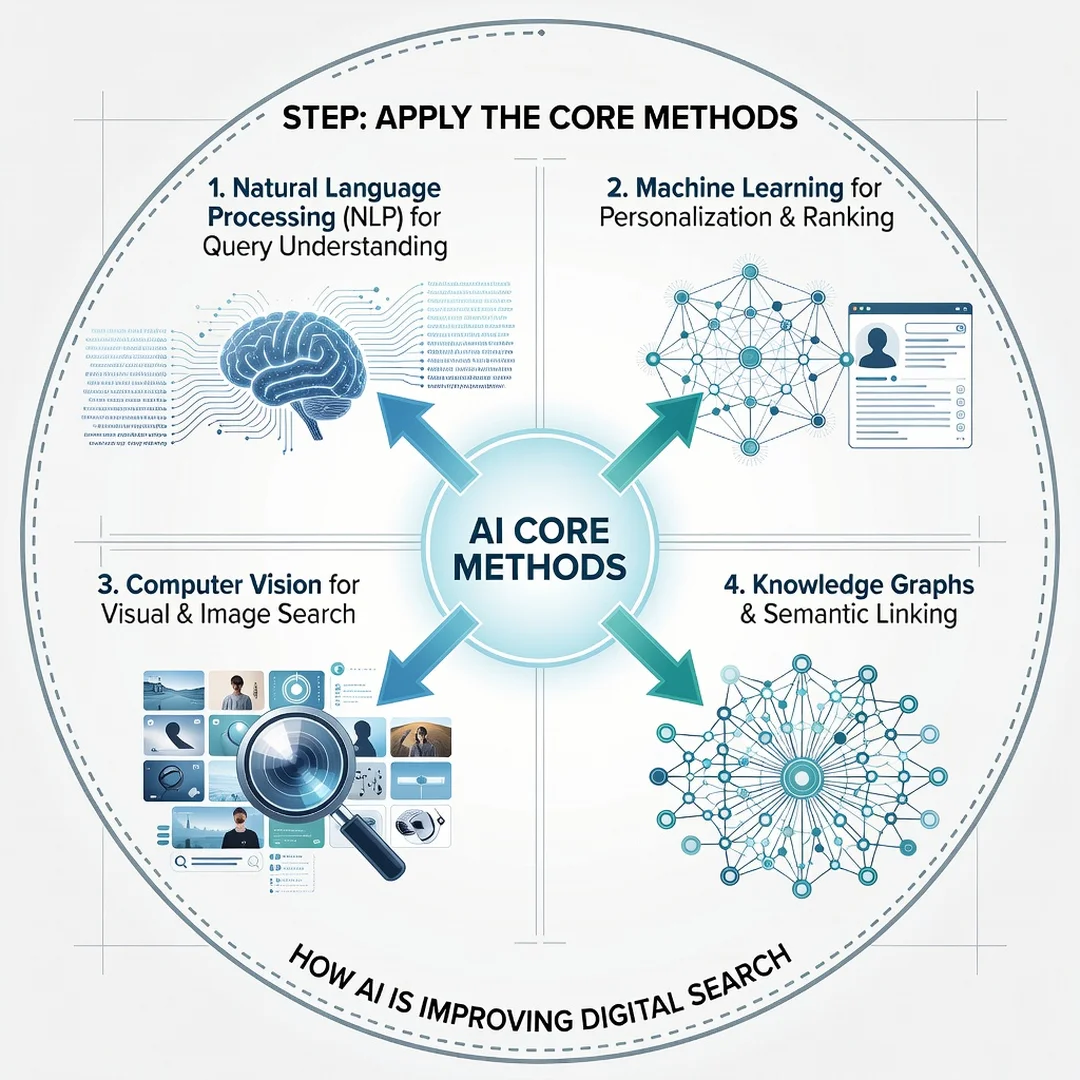
- Semantic search: Instead of matching exact words, AI search tries to understand meaning. A query about “cheap flights to Rome” can return results about “budget airfare to Italy” because the system recognizes the concepts are related.
- Natural language processing (NLP): This is the branch of AI that helps machines read and interpret human language. It powers everything from autocomplete suggestions to the way a search engine understands that “how do I fix a leaky faucet” is a request for instructions.
- Ranking models: Once results are found, AI ranks them. Modern systems use learning-to-rank algorithms that weigh hundreds of signals, including relevance, freshness, authority, and your past behavior.
- Personalization: AI can tailor results based on your location, language, device, and search history. This makes results more useful but also means two people may see different answers to the same question.
- Generative answers: Newer search experiences summarize information directly, using large language models to produce a short answer with links to sources. This is sometimes called “answer engine” behavior.
These concepts matter because they explain why AI search feels different from older tools. It is not just faster; it is trying to understand you.
Deep Dive
The shift toward AI in search has happened in stages. Early search engines relied on keyword indexes and link analysis. Then came machine learning, which allowed ranking systems to improve from data rather than hand-coded rules. Today, transformer-based models and large language models handle much of the heavy lifting, enabling search that can summarize, compare, and even hold a conversation.
One practical consequence is that search queries are getting longer and more conversational. People now type full questions like “what is the best way to learn a new language as an adult” instead of “language learning adults.” AI handles this well because it was trained on natural text. Another consequence is that search results are increasingly synthesized. Instead of scanning ten blue links, you may get a paragraph that answers your question, followed by citations.
This also changes how businesses and creators think about being found. Search engine optimization is no longer only about keywords. It is about clarity, structure, and answering real questions. Content that is well organized with headings, lists, and direct answers tends to perform better because AI systems can parse it more easily.
Reliable information and consistent habits lead to better long-term outcomes. That principle applies here: if you consistently use clear queries, check sources, and refine your search approach, you will get more value from AI search over time.
Best Practices
To get the most from AI-powered search, follow these practical habits:
- Be specific and natural. Write your query the way you would ask a knowledgeable friend. Include context like location, time frame, or constraints.
- Use follow-up questions. AI search often supports conversation. If the first answer is close but not quite right, ask a clarifying question.
- Check sources. Summaries are convenient, but verify important facts against primary sources, especially for health, finance, or legal topics.
- Vary your phrasing. If one query does not work, rephrase it. Different wording can surface different results.
- Adjust settings. Turn off personalization if you want a more neutral view, or use filters to narrow by date, region, or type of content.
- Keep a record. For research, save useful links and notes. AI results can change over time, so capturing what you found helps later.
These habits are simple but effective. They turn search from a guessing game into a reliable tool.
Step-by-Step Guide
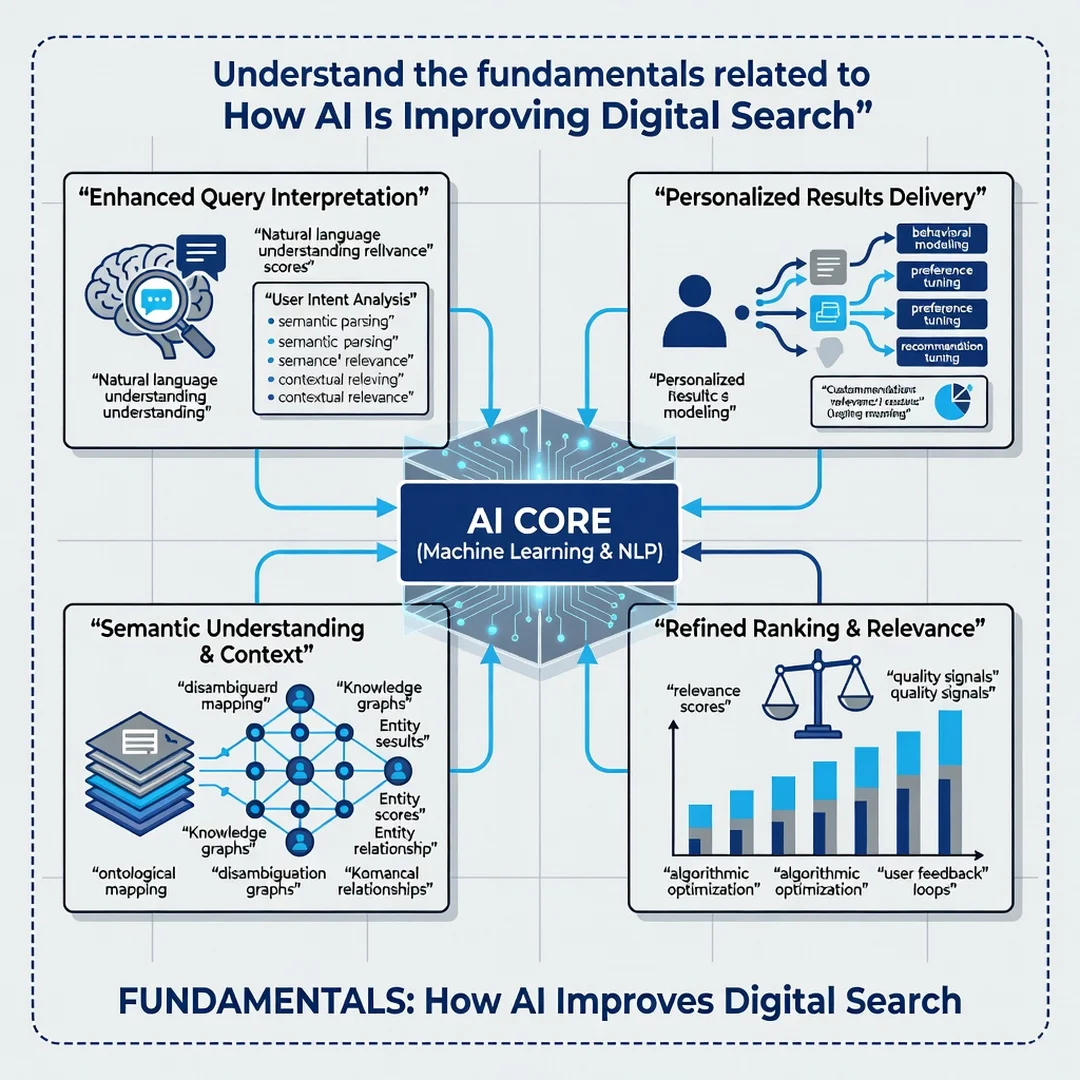
Step 1: Understand the fundamentals
Start by learning what AI search actually does. Read a short overview of semantic search, ranking, and answer generation. Knowing that the system interprets meaning, not just words, will change how you phrase queries.
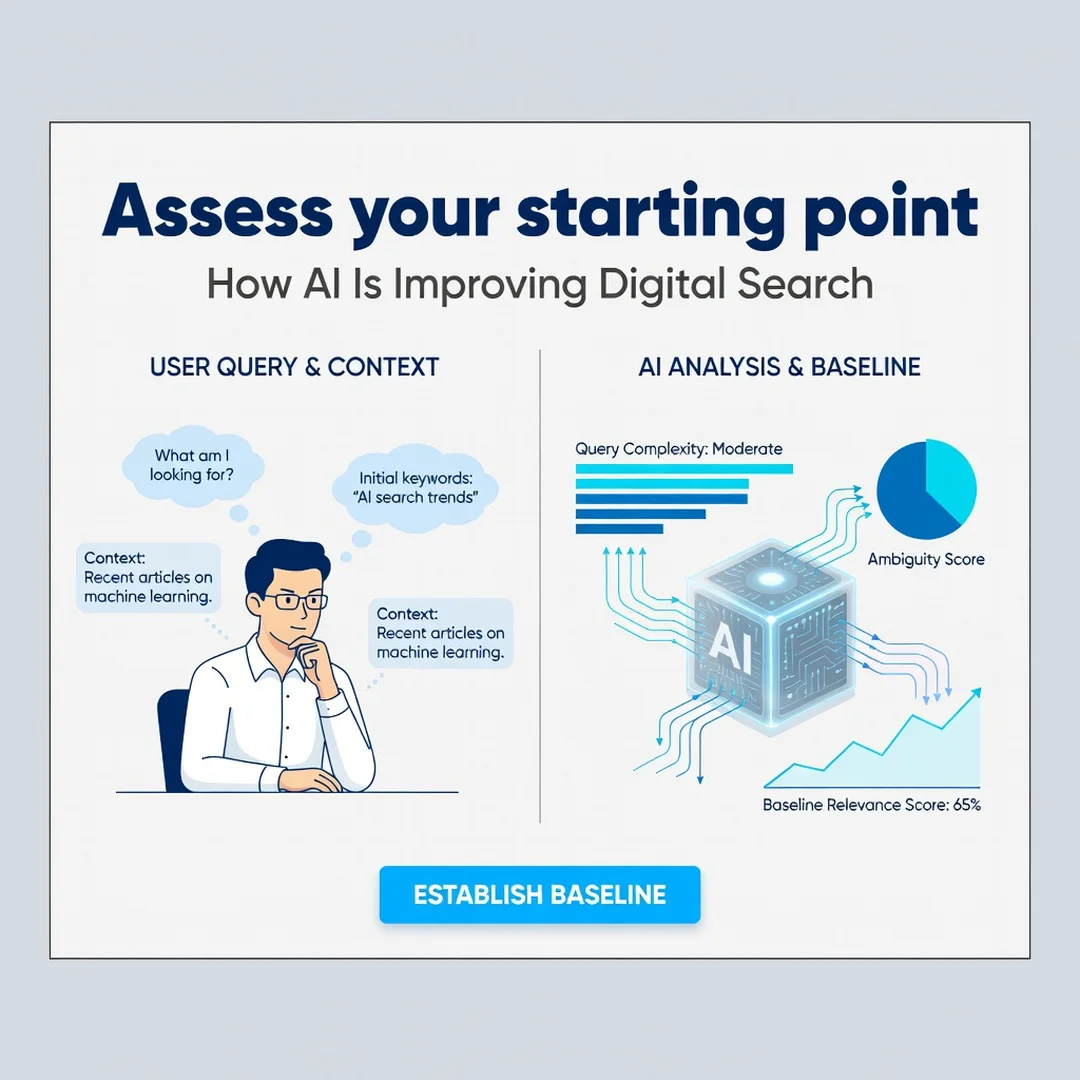
Step 2: Assess your starting point
Look at how you currently search. Do you type short keywords or full questions? Do you check sources? Identify one or two habits you want to improve, such as being more specific or verifying results.
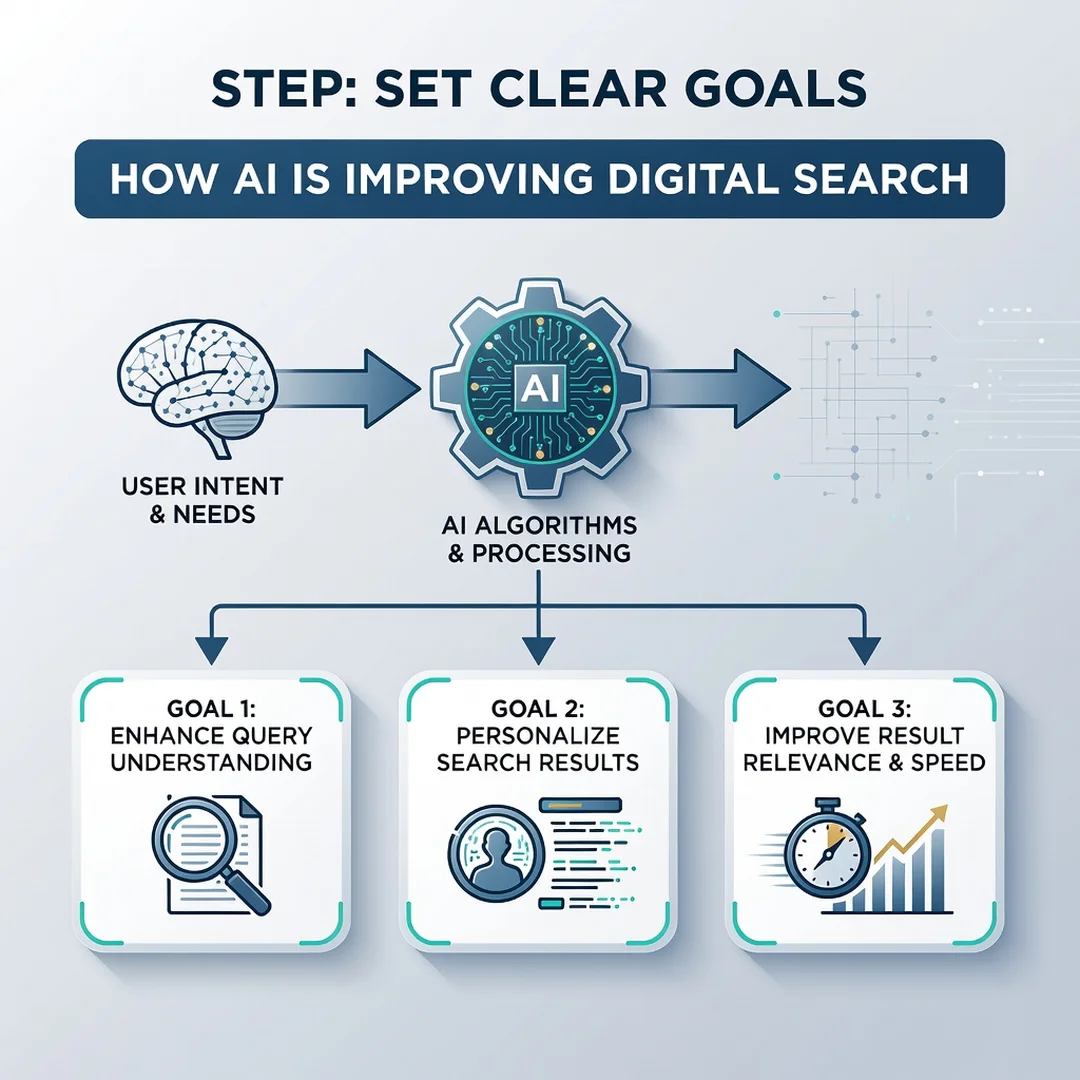
Step 3: Set clear goals
Decide what you want from AI search. Examples include finding reliable health information faster, researching a purchase, or learning a new skill. Clear goals help you judge whether a result is actually useful.
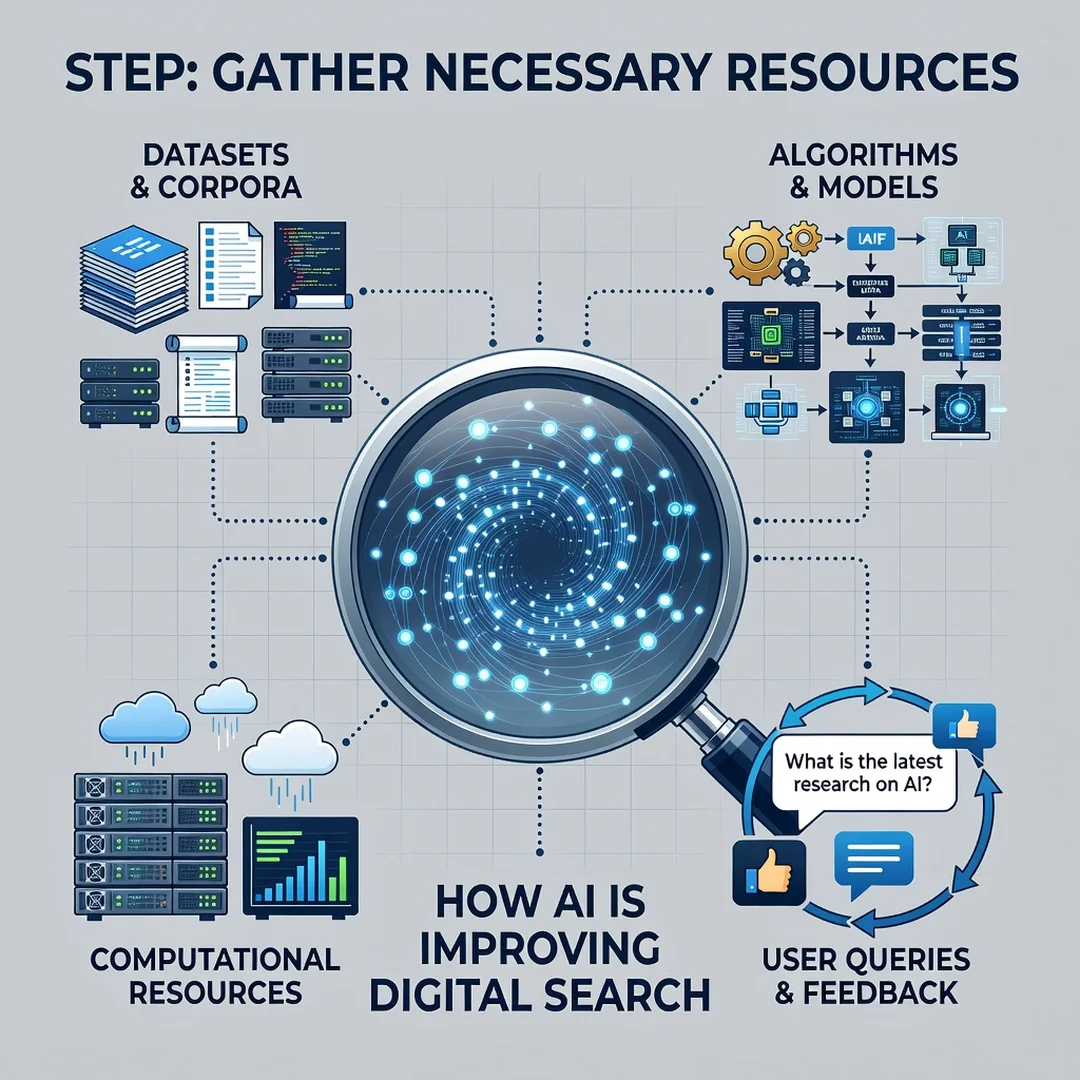
Step 4: Gather necessary resources
Bookmark trusted sources, set up a notes app for research, and explore search tools that support AI features. Having a system in place makes it easier to act on what you find.
Step 5: Apply the core methods
Put the best practices into action. Write natural queries, ask follow-ups, verify claims, and adjust settings as needed. Review your results weekly and refine your approach based on what works.
FAQ
What should I know about How AI Is Improving Digital Search?
The main thing to know is that AI search focuses on understanding meaning and intent rather than just matching keywords. This makes it more useful for complex questions but also means results can be personalized and occasionally less transparent. Use clear queries, check sources, and treat AI summaries as a starting point rather than the final word.
Who is this guide for?
This guide is for anyone who uses search engines, voice assistants, or recommendation systems and wants better results. That includes students, professionals, researchers, and everyday users. No technical background is required.
Conclusion
AI is reshaping digital search in ways that are practical and far-reaching. It is making search more conversational, more context-aware, and more capable of delivering direct answers. By understanding the fundamentals, following best practices, and using a step-by-step approach, you can turn these tools into a genuine advantage. Reliable information and consistent habits lead to better long-term outcomes, and that is exactly what thoughtful use of AI search provides.
Frequently Asked Questions
What should I know about How AI Is Improving Digital Search?
This guide covers the essentials of How AI Is Improving Digital Search with practical steps you can apply right away.
Who is this guide for?
Anyone looking for a clear, structured overview without unnecessary complexity.
You now have a solid foundation for How AI Is Improving Digital Search. Apply the best practices above and revisit this guide as your needs evolve.