

Online communication has changed dramatically in just a few years. From instant messaging apps to AI-powered translation, technology is transforming online communication in ways that make conversations faster, clearer, and more accessible to everyone.
In this article, we’ll explore the key innovations driving this shift — and show you how to use them to connect more effectively in your daily life and work.
Introduction
Online communication has moved from a niche activity to the backbone of modern life. Emails, instant messages, video calls, social platforms, and collaborative documents now carry much of the information that used to travel by phone, letter, or in-person meeting. This article explores How Technology Is Transforming Online Communication with clear, practical guidance. Rather than treating the shift as a distant trend, it focuses on what has actually changed and how you can use those changes to communicate more effectively, whether you are managing a remote team, staying close to family, or building a professional network.
The transformation is not just about faster connections. It is about the tools, habits, and expectations that surround every message you send. Understanding the fundamentals of How Technology Is Transforming Online Communication helps you make informed decisions about which platforms to use, how to protect your privacy, and when a quick text is better than a scheduled call. Reliable information and consistent habits lead to better long-term outcomes, and that principle applies just as strongly to communication as it does to fitness or finance.
Key Concepts
To make sense of the changes, it helps to separate the major forces at work. Each one changes what is possible and what is expected of you as a communicator.
- Real-time vs. asynchronous communication: Live video and chat happen in the moment, while email, recorded video, and shared documents let people respond on their own schedule. The best communicators switch between the two depending on urgency and complexity.
- Richness and context: Text strips away tone and body language. Emojis, reactions, threaded replies, and voice notes are technological attempts to put that context back. Choosing the right level of richness prevents misunderstandings.
- Persistence and searchability: Nearly every message is stored and searchable. This is a gift for record-keeping and a risk for privacy. What you send today can resurface years later.
- Automation and AI: Smart replies, translation, transcription, and summarization tools now sit inside messaging apps. They reduce friction but can also flatten nuance if used carelessly.
- Access and inclusion: Fast internet, captions, screen readers, and low-bandwidth modes determine who can participate. Technology can widen the circle or narrow it, depending on how it is deployed.
These concepts matter because they shape daily choices. A project update that would take twenty minutes of back-and-forth chat might take three minutes as a recorded voice message. A sensitive conversation that feels awkward in text may belong on a video call. Recognizing the trade-offs is the first step toward better outcomes.
Deep Dive
The most visible change is speed. Messages that once took days now arrive in seconds, and that immediacy has rewired expectations. Colleagues assume quick replies, friends expect instant reactions, and customers anticipate near-instant support. Speed is useful, but it also creates pressure to respond before thinking. One practical countermeasure is to match response time to the channel. Treat chat as fast, email as same-day, and formal documents as planned work. This simple rule reduces anxiety and improves the quality of what you send.
A second shift is the blending of personal and professional spaces. The same phone that holds family photos also holds work email. The same platform that hosts a birthday video call may host a client presentation. This blending demands clearer boundaries. Many people now use separate notification profiles, distinct apps, or scheduled “offline” hours to keep contexts from bleeding into each other. The technology enables the blend, but you decide how much to allow.
Third, the rise of multimedia has made communication richer but heavier. A short video can convey warmth and detail that text cannot, yet it also takes longer to produce and consume. The practical skill is choosing the lightest format that still carries the full meaning. For a quick confirmation, text wins. For feedback on a design, a screenshot with annotations wins. For a difficult conversation, voice or video usually wins because tone carries the message.
Finally, security and trust have become central. Phishing, impersonation, and data leaks are now routine risks. Basic habits—verifying unusual requests, using multi-factor authentication, and avoiding sensitive details in public channels—protect both you and the people you communicate with. Trust is the currency of online communication, and it is built through consistent, careful behavior over time.
Best Practices
Good communication online is less about talent and more about repeatable habits. The following practices work across platforms and contexts.
- Choose the channel deliberately. Before sending, ask whether the message needs speed, richness, or a record. Let that answer guide your choice.
- Write for skimming. Use short paragraphs, clear subject lines, and one main ask per message. People read on phones in fragments, not in long sittings.
- Confirm understanding. A brief “Does this match what you expected?” prevents costly assumptions, especially in text-only exchanges.
- Respect availability. Avoid non-urgent messages outside working hours unless the relationship and context make it welcome.
- Protect sensitive information. Share credentials or personal details only through secure, approved channels.
- Review before sending. A ten-second reread catches tone problems, missing context, and accidental recipients.
- Keep a personal record. Note important decisions and commitments so you are not relying on a search bar months later.
These habits compound. Reliable information and consistent habits lead to better long-term outcomes, and communication is no exception. Small improvements in clarity and timing save hours of confusion across a year.
Step-by-Step Guide
If you want to improve how you communicate online, work through these steps in order. Each one builds on the last.

Step 1: Understand the fundamentals
Start by mapping the tools you already use and what each is good at. List your messaging apps, email accounts, video platforms, and shared documents. For each one, note whether it is best for quick updates, detailed discussion, or formal records. This inventory gives you a clear picture of your communication landscape and reveals gaps or overlaps.
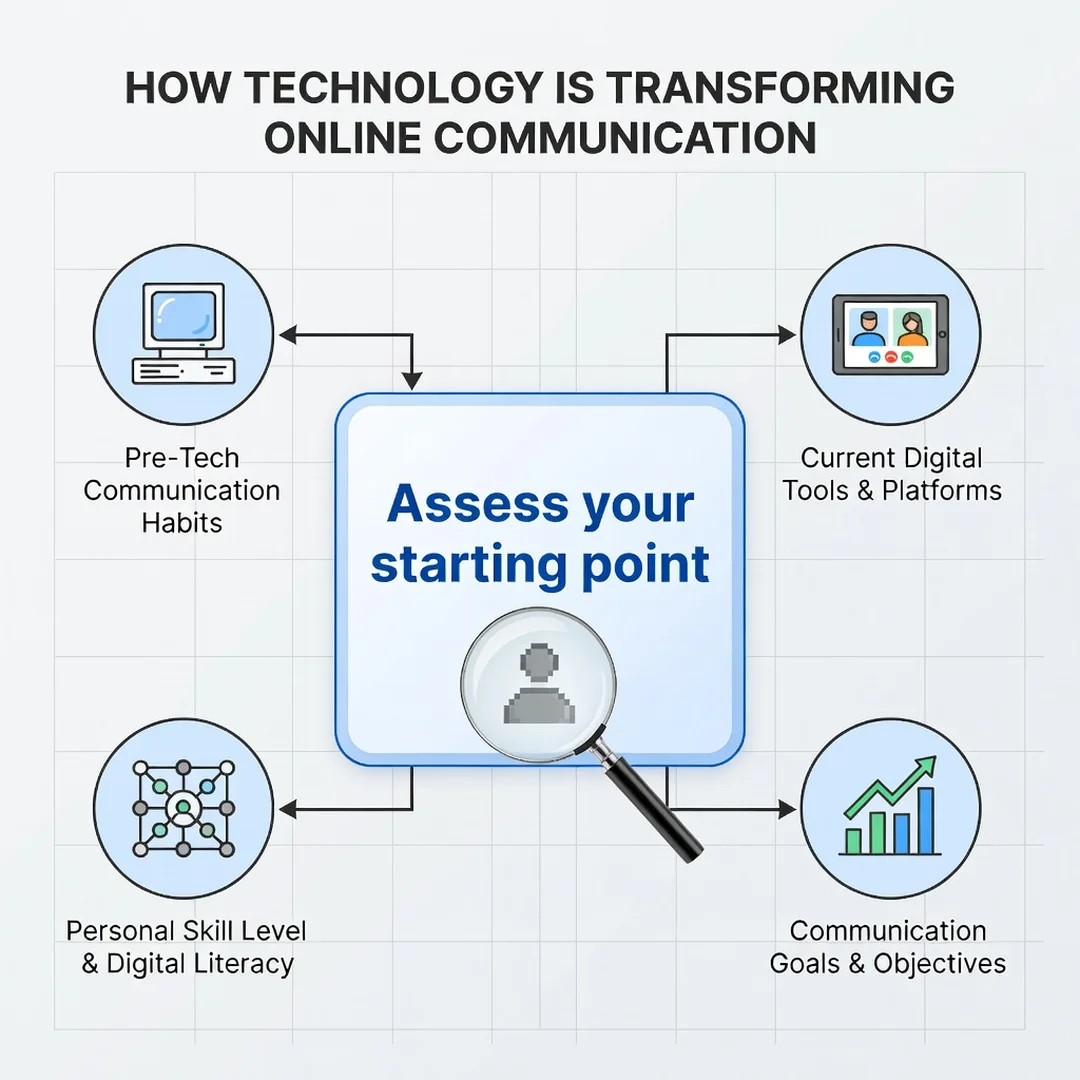
Step 2: Assess your starting point
Look back at recent conversations that went poorly or took too long. Were they on the wrong channel? Missing context? Sent at a bad time? Honest review shows where your current habits break down. A simple log of three or four problem interactions is usually enough to reveal a pattern.

Step 3: Set clear goals
Decide what better communication looks like for you. Goals might include faster response times on urgent items, fewer misunderstandings, or stronger privacy habits. Make each goal specific and measurable, such as “reply to client emails within one business day” or “move sensitive discussions to encrypted channels.”
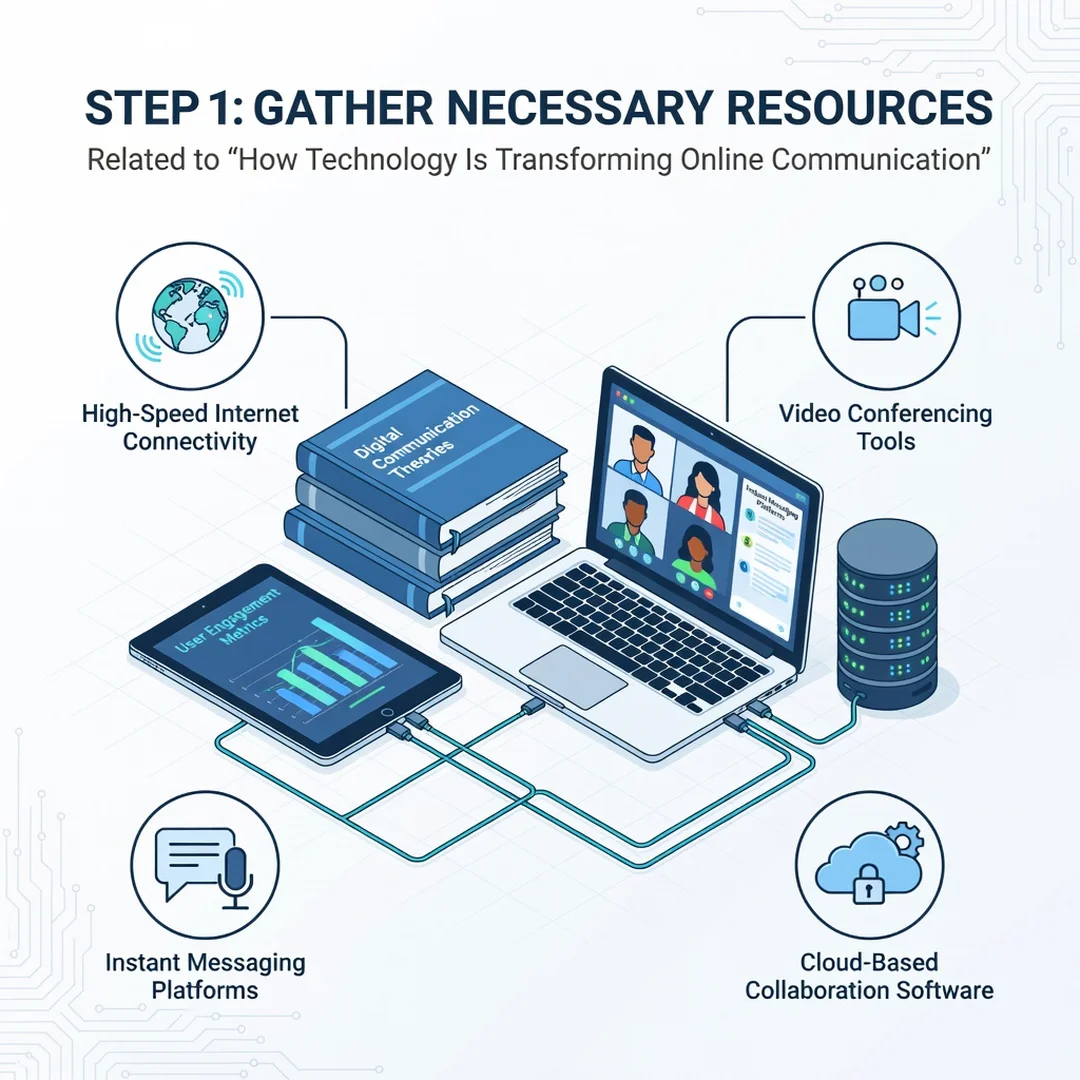
Step 4: Gather necessary resources
Collect what you need to meet those goals. This may include updating apps, enabling multi-factor authentication, setting up folders or labels, or learning a platform’s accessibility features. Resources also include people: identify who can answer questions or review important messages before they go out.

Step 5: Apply the core methods
Put your plan into daily practice. Use the right channel for each message, write for skimming, confirm understanding, and respect others’ time. Review your progress weekly and adjust. Consistency matters more than perfection; even modest improvements in clarity and timing produce noticeably better results within a month.
FAQ
What should I know about How Technology Is Transforming Online Communication?
The core takeaway is that technology changes the speed, richness, and permanence of every message. Understanding the fundamentals of How Technology Is Transforming Online Communication helps you make informed decisions about channels, tone, and privacy. You do not need to master every new app. You need a clear sense of what each tool does well, when to use it, and how to protect your information. Reliable information and consistent habits lead to better long-term outcomes, so focus on durable practices rather than chasing every trend.
Who is this guide for?
This guide is for anyone who communicates online and wants to do it more effectively. That includes remote workers, students, small business owners, job seekers, and people staying in touch with friends and family. No technical background is required. The steps and practices are designed to be useful whether you are a casual user or someone who manages communication for a team.
Conclusion
Technology has reshaped online communication in ways that are practical and permanent. Speed, multimedia, persistence, and automation are now part of everyday exchanges. By understanding the fundamentals, choosing channels deliberately, and building consistent habits, you can communicate with greater clarity and confidence. The tools will keep changing, but the principles behind effective communication remain stable. Start with the steps above, adjust as you.
You now have a solid foundation for How Technology Is Transforming Online Communication. Apply the best practices above and revisit this guide as your needs evolve.