
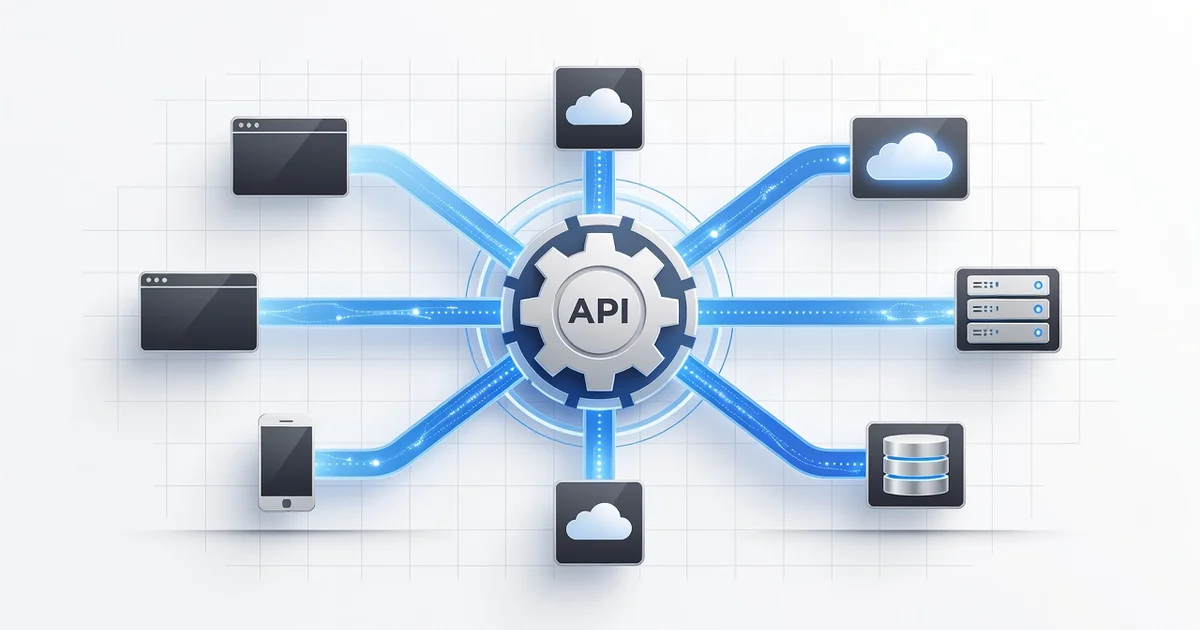
API technology is the invisible engine behind almost every digital service you use today. When you check the weather on your phone, pay with a mobile wallet, or log in with your Google account, an API is quietly working in the background to connect those apps and share data securely.
So what is API technology, and why does it matter? In short, it lets different software systems talk to each other without human intervention. Understanding this concept helps you see how modern products are built, why integration drives efficiency, and how businesses scale faster by reusing trusted services.
Introduction
Application Programming Interfaces, or APIs, are the invisible connectors that power much of the digital world. When you check the weather on your phone, pay with a credit card, or log into a website using your Google account, an API is working behind the scenes. This article explores What Is API Technology and Why Is It Important with clear, practical guidance. Understanding the fundamentals of What Is API Technology and Why Is It Important helps you make informed decisions, whether you are a developer, a business owner, or simply a curious user who wants to know how modern software talks to itself.
At its core, an API is a set of rules and protocols that allows one software application to interact with another. Think of it as a restaurant menu: you do not need to know how the kitchen prepares your food, only what you can order and how to ask for it. The API defines the available “dishes” (functions or data), the “order format” (requests), and the “response” (data or confirmation). This abstraction is what makes APIs so powerful and so widespread.
Key Concepts
To grasp why APIs matter, you need a few core concepts. First, endpoints: these are specific URLs where an API can be accessed. Each endpoint corresponds to a resource, such as a user profile or a product listing. Second, HTTP methods: GET retrieves data, POST creates it, PUT updates it, and DELETE removes it. Third, requests and responses: a client sends a request, and the server returns a response, often in JSON or XML format.
Another key idea is authentication. APIs need to know who is asking. Common methods include API keys, OAuth tokens, and JSON Web Tokens (JWT). Without authentication, anyone could access or modify sensitive data. Finally, rate limiting ensures that a single user or application does not overwhelm the API with too many requests. These concepts form the backbone of API technology.
- Endpoint: A specific URL that provides access to a resource.
- HTTP methods: GET, POST, PUT, DELETE, and others.
- Request/response cycle: The client asks, the server answers.
- Authentication: Verifying identity via keys, tokens, or OAuth.
- Rate limiting: Controlling how often an API can be called.
Understanding these fundamentals of What Is API Technology and Why Is It Important helps you make informed decisions about integrating services, building software, or troubleshooting issues.
Deep Dive
Why is API technology so important? Because it enables modularity, scalability, and innovation. Instead of building every feature from scratch, developers can leverage existing APIs. For example, a travel booking site can use a payment API (like Stripe), a maps API (like Google Maps), and a weather API (like OpenWeather) to create a rich user experience without reinventing the wheel. This speeds up development and reduces costs.
APIs also drive business value. Companies like Twilio, Stripe, and Plaid built entire business models around providing APIs. Internally, APIs allow different teams to work independently. A mobile team can consume the same API as a web team, ensuring consistency. In e-commerce, APIs handle inventory, shipping, and customer data in real time. In healthcare, APIs enable secure exchange of patient records between systems. In finance, open banking APIs let third-party apps access account information with user consent.
However, APIs are not without challenges. Security is a major concern. A poorly secured API can expose private data or allow unauthorized actions. Versioning is another issue: when an API changes, existing clients may break. Documentation quality varies widely; a confusing API can waste hours of developer time. Latency and reliability also matter—if an API goes down, dependent services fail. That is why best practices exist.
Consider the difference between REST and GraphQL. REST APIs expose multiple endpoints, each returning fixed data structures. GraphQL APIs expose a single endpoint where clients specify exactly what data they need. Both have trade-offs. REST is simpler and more cacheable; GraphQL reduces over-fetching but adds complexity. Choosing the right style depends on your use case.
Reliable information and consistent habits lead to better long-term outcomes. This applies to API usage too: reading documentation carefully, testing in a sandbox, and monitoring API health are habits that prevent problems.
Best Practices
Whether you are consuming or building APIs, following best practices saves time and prevents headaches. For consumers, always read the official documentation first. Use environment variables to store API keys—never hardcode them. Implement retry logic with exponential backoff for transient failures. Cache responses when appropriate to reduce latency and stay within rate limits. Monitor your API calls for errors and performance.
For builders, design APIs to be intuitive and consistent. Use clear naming conventions for endpoints and parameters. Version your API from day one, for example by including /v1/ in the URL. Provide comprehensive documentation with examples in multiple languages. Implement robust authentication and authorization. Log requests and responses for debugging, but avoid logging sensitive data. Set reasonable rate limits and return meaningful error messages with HTTP status codes.
- Consumers: Store keys securely, handle errors gracefully, respect rate limits.
- Builders: Version early, document thoroughly, secure by design.
- Both: Use HTTPS, validate inputs, monitor performance.
- Testing: Always test in a sandbox before production.
- Communication: Provide clear error messages and support channels.
Adopting these habits ensures that API technology remains an asset rather than a liability. Consistent habits lead to better long-term outcomes, as mentioned earlier.
Step-by-Step Guide to Working with APIs
If you are new to APIs, follow these steps to get started effectively.
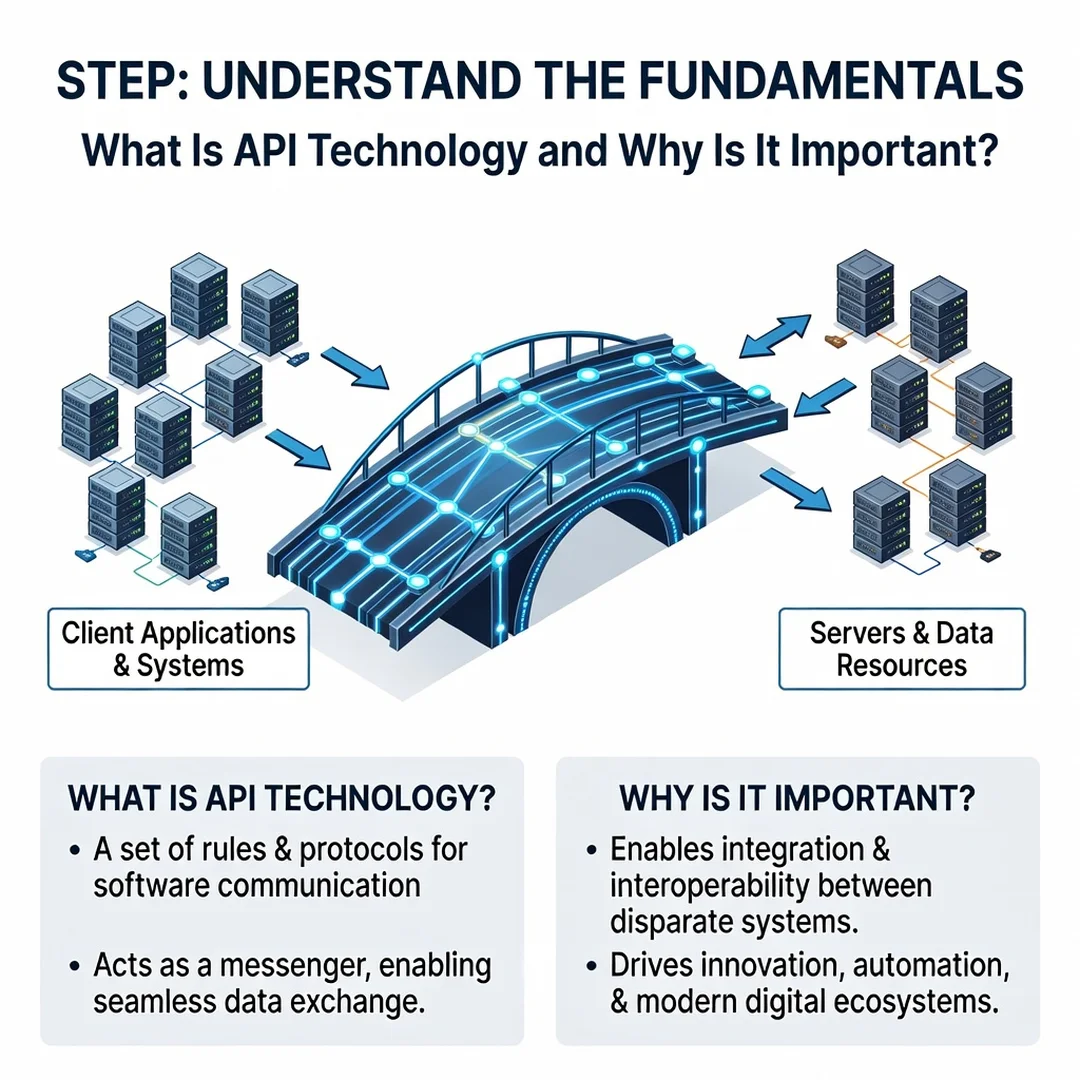
Step 1: Understand the fundamentals
Learn what an API is, how HTTP works, and the difference between REST and GraphQL. Read introductory tutorials and try a simple public API like the Pokémon API or a weather API. Use a tool like Postman or curl to make your first request.
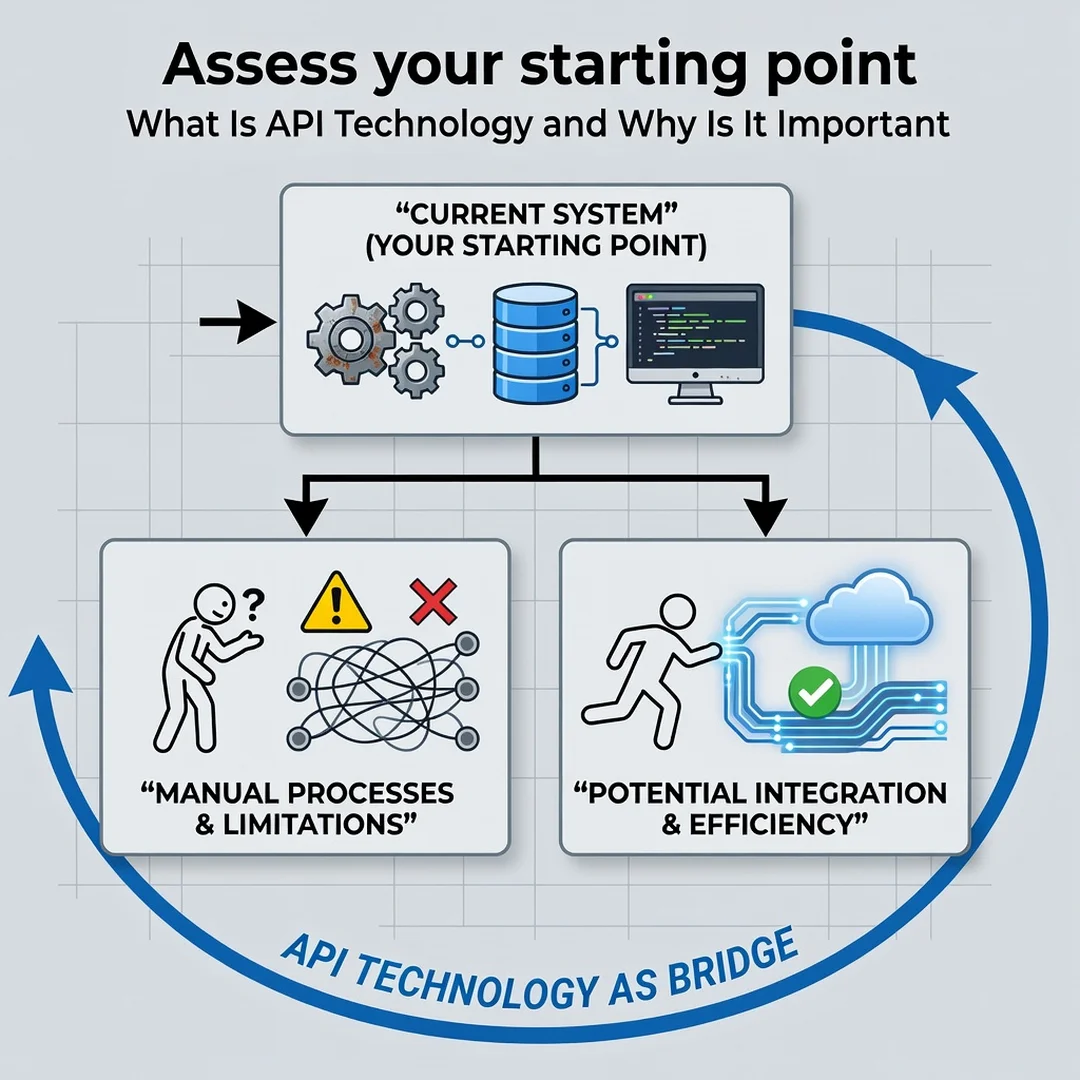
Step 2: Assess your starting point
Determine your goal: Are you building an app that needs data? Are you integrating a payment system? Are you exposing your own data to others? Assess your technical skills, available time, and budget. This will guide which APIs to use and how much effort to invest.
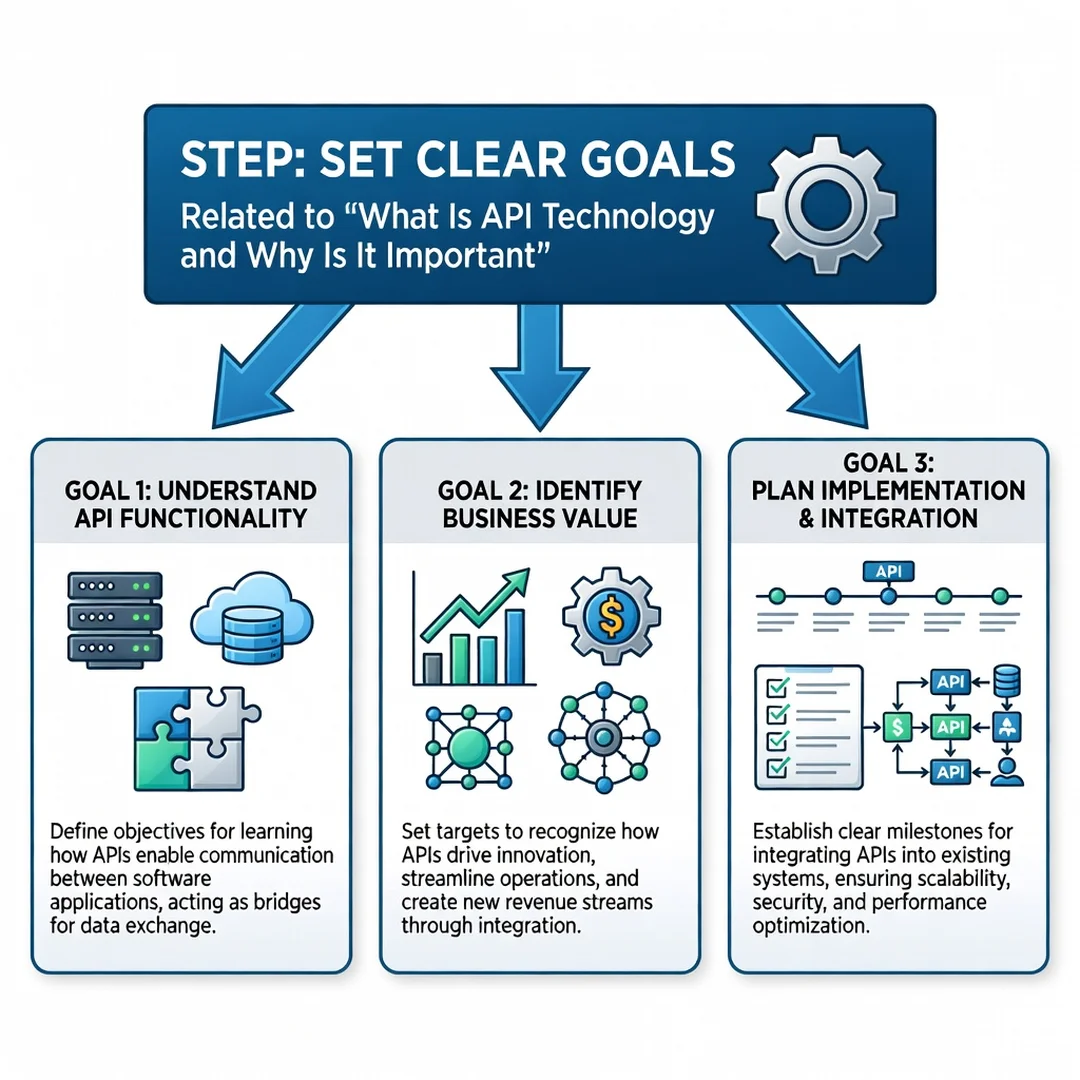
Step 3: Set clear goals
Define what success looks like. For example, “I want to fetch user data from an API and display it in a table” or “I want to allow third-party developers to access my product catalog.” Clear goals help you choose the right endpoints, authentication methods, and data formats.
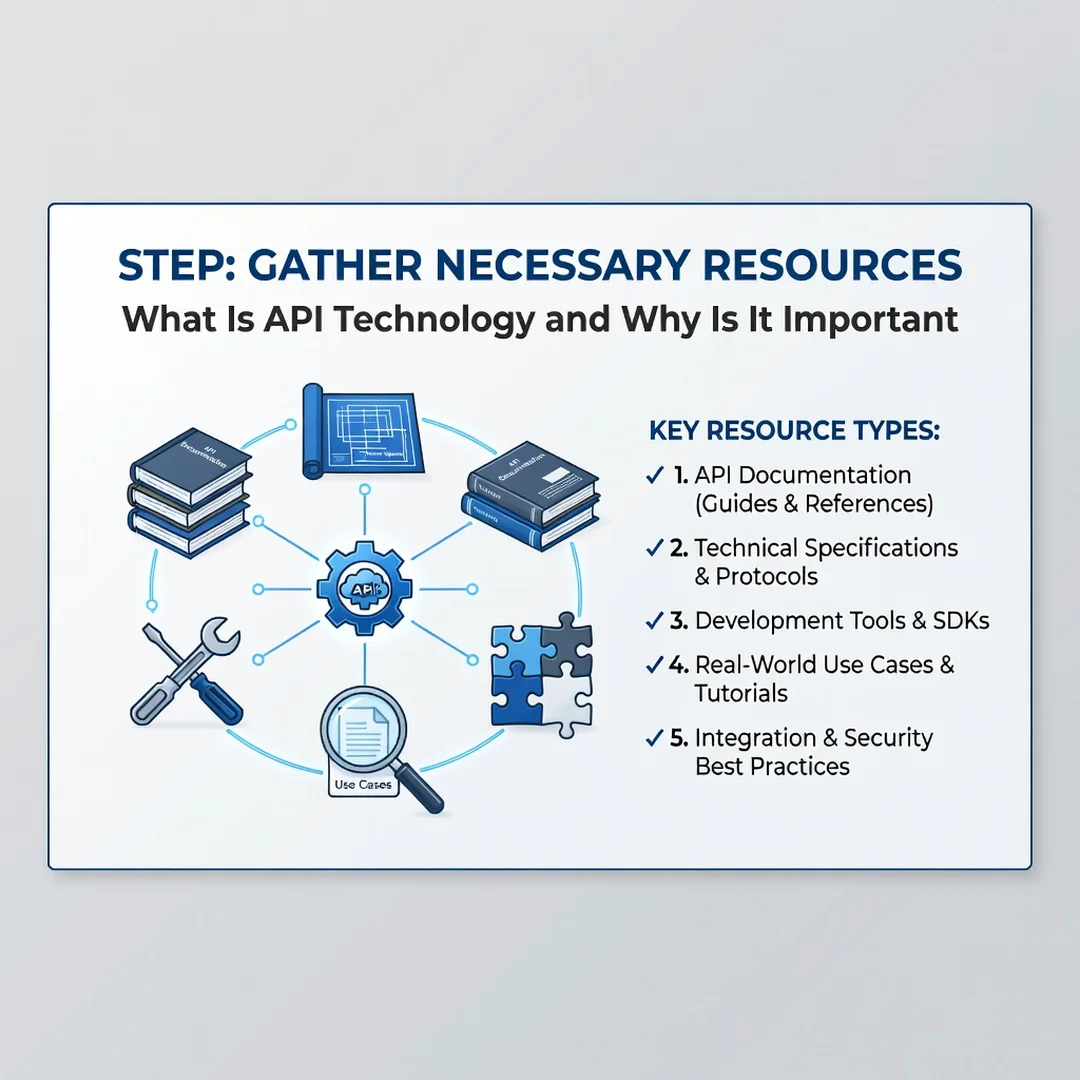
Step 4: Gather necessary resources
Collect API keys, documentation links, and sample code. Set up a development environment with the necessary libraries (e.g., requests for Python, axios for JavaScript). If you are building an API, choose a framework like Express, Django REST, or FastAPI. Ensure you have a testing sandbox.
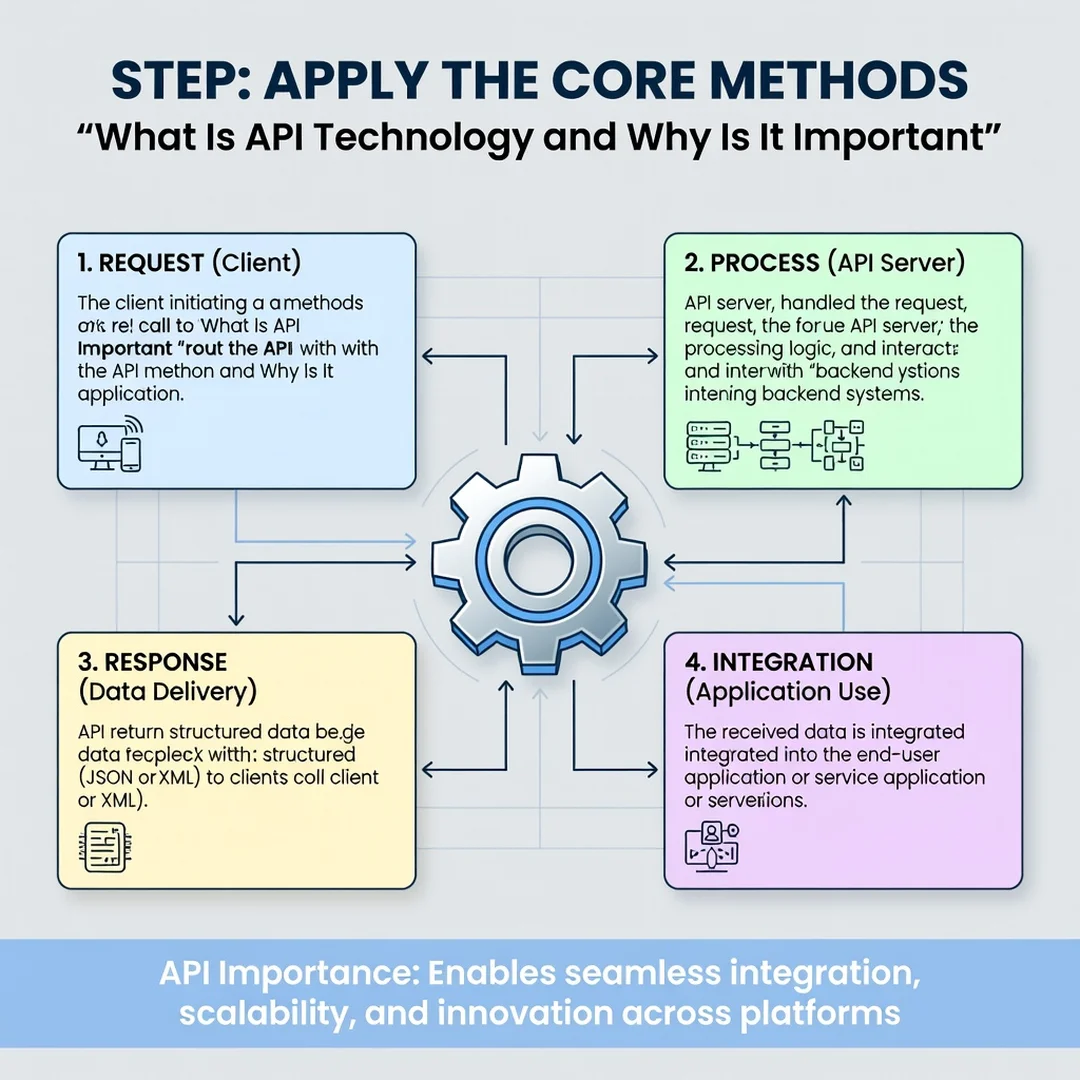
Step 5: Apply the core methods
Start making requests. For consuming: use GET to retrieve data, POST to create, and so on. Handle responses and errors. For building: define endpoints, implement authentication, and test with tools like Postman. Iterate based on feedback. Remember to monitor and log.
These steps provide a practical path. With practice, working with APIs becomes second nature.
FAQ
What should I know about What Is API Technology and Why Is It Important?
You should know that APIs are the glue between software systems, enabling communication without exposing internal details. They are important because they save time, reduce costs, and enable innovation. Key concepts include endpoints, HTTP methods, authentication, and rate limiting. Understanding these helps you make informed decisions about integration and development. Reliability and consistency in using APIs lead to better outcomes.
Who is this guide for?
This guide is for anyone seeking clear, actionable information about API technology. It is suitable for beginners who want a foundational understanding, developers who need a refresher, business owners evaluating API strategies, and students exploring modern software architecture. No prior deep technical knowledge is required, though some familiarity with web concepts helps.
Conclusion
API technology is not just a technical detail—it is a fundamental building block of the digital economy. From social media integrations to banking apps, APIs make seamless connectivity possible. By understanding the key concepts, following best practices, and applying the step-by-step approach, you can harness APIs effectively. Whether you are consuming or building them, reliable information and consistent habits lead to better long-term outcomes. Start small, experiment,.
You now have a solid foundation for What Is API Technology and Why Is It Important. Apply the best practices above and revisit this guide as your needs evolve.