
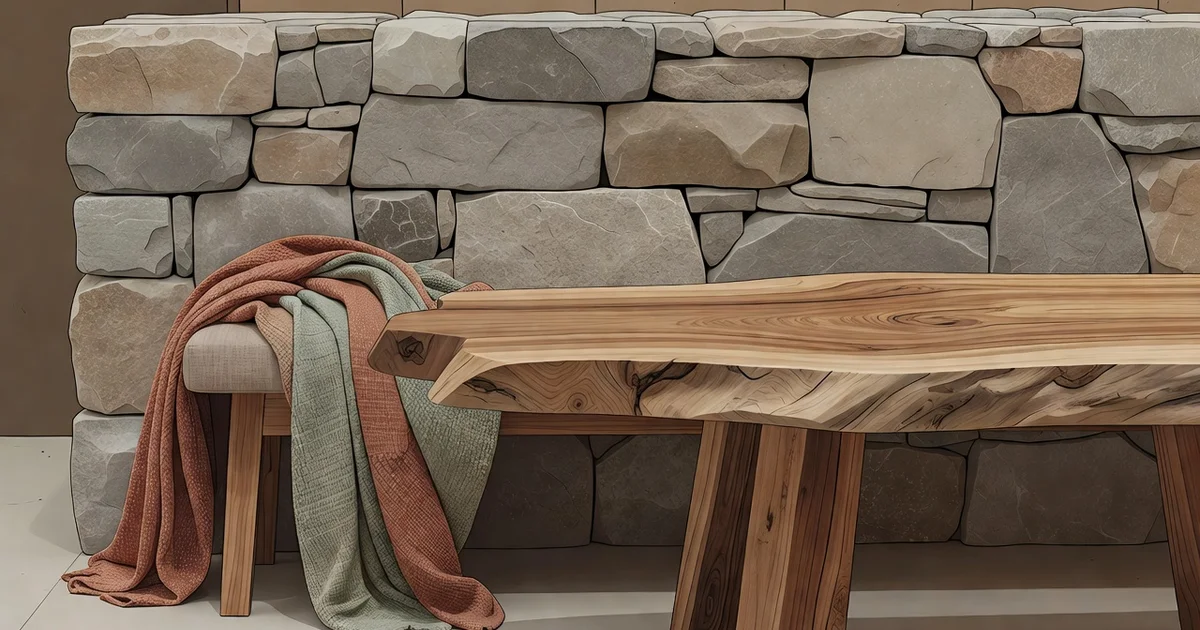
Walk into any room lined with natural materials, and something shifts. The space feels softer, calmer, and somehow more inviting. That’s no accident — wood, stone, wool, and clay absorb sound, regulate humidity, and reflect light in ways synthetic finishes simply can’t match. Understanding which natural materials make interior spaces feel warmer gives you a clear advantage when planning a renovation or refresh.
In this article, we’ll explore the most effective options for every budget and room, from reclaimed timber to linen and cork. You’ll learn what each material does well, where it works best, and how to combine them for a cohesive, welcoming result.
Introduction
Walk into a room lined with oak, wool, and linen, and you feel it before you can name it: a softness, a calm, a sense of being sheltered. That reaction is not sentimental. It is the result of how natural materials interact with light, sound, temperature, and touch. This article explores Natural Materials That Make Interior Spaces Feel Warmer with clear, practical guidance you can apply whether you are furnishing a single room or renovating an entire home.
Warmth in interior design is not only about color. It comes from texture, porosity, and the way a surface absorbs or reflects light. A polished glass table bounces light back at you; a raw timber table drinks it in. Understanding the fundamentals of Natural Materials That Make Interior Spaces Feel Warmer helps you make informed decisions instead of guessing at what will feel right.
Reliable information and consistent habits lead to better long-term outcomes. That principle applies here too. Choosing materials is a skill, and like any skill it improves with practice, observation, and a willingness to adjust.
Key Concepts
Before you buy anything, it helps to understand why certain materials read as warm and others as cold. Four concepts explain most of it.
Texture and tactile quality
Warmth is felt through the skin as much as seen through the eyes. Rough, matte, and slightly irregular surfaces invite touch. Smooth, glossy, and uniform surfaces keep you at a distance. Wool, jute, cork, and unfinished stone all signal softness and age.
Porosity and light absorption
Porous materials absorb light rather than reflecting it. This produces gentle shadows and a sense of depth. Brick, terracotta, rattan, and lime plaster are naturally porous, which is why rooms finished in them feel enveloping rather than stark.
Thermal behavior
Materials also differ in how they conduct heat. Wood and cork feel warm to the touch because they conduct heat slowly. Metal, glass, and polished concrete pull heat from your hand quickly, which registers as cold even at the same room temperature.
Color and patina
Natural materials rarely hold a single flat color. They shift with light and age. This variation, called patina, makes a space feel lived in rather than staged.
- Wood: oak, walnut, ash, pine
- Textiles: wool, linen, cotton, hemp
- Plant fibers: rattan, jute, sisal, bamboo
- Earth and stone: clay, terracotta, limestone, slate
- Animal and mineral: leather, cork, sheepskin, lime plaster
Deep Dive
Knowing the categories is one thing. Knowing how they behave in a real room is another. Consider how these materials perform across the senses.
Wood as a foundation
Wood is the single most reliable warmth-bringer. Floorboards, exposed beams, simple furniture, and even a single wooden bowl add organic variation that manufactured surfaces cannot imitate. Different species shift the mood: pale ash feels airy and Scandinavian, while deep walnut feels grounded and traditional. Solid wood usually outperforms veneer because its grain is continuous and its surface can be refinished.
Textiles as softness
Textiles absorb sound, which is why a room with curtains, rugs, and upholstery feels quieter and therefore warmer. Wool is the strongest performer: it regulates moisture, resists dirt, and holds its shape for decades. Linen brings a crisp, slightly rumpled elegance. Layering a chunky knit over a smooth cotton cushion creates contrast that reads as comfort.
Plant fibers as rhythm
Rattan, cane, and bamboo introduce a different kind of warmth: visual rhythm. Their repeating lines and open weaves create shadows that move across a wall during the day. They are light, affordable, and work equally well in a coastal cottage or a city apartment.
Earth and stone as grounding
Clay, brick, and natural stone bring a mineral solidity. Terracotta tiles feel warm underfoot in a way that porcelain never does. Lime plaster, with its subtle mottling, softens walls that would otherwise feel like blank paper. These materials age gracefully and often improve with use.
Where warmth can go wrong
Too much of a good thing tips into heaviness. An all-wood room with dark textiles and no light surfaces can feel like a cabin in the wrong way: cramped and dim. The remedy is balance. Pair a warm base with a few cool accents, such as a glass lamp, a metal frame, or a pale wall, so the eye has somewhere to rest.
Best Practices
These guidelines help you use natural materials deliberately rather than decoratively.
- Start with one anchor material per room, usually wood or stone, and build outward from it.
- Mix at least three textures in any seating area: something smooth, something rough, something soft.
- Choose finishes that show age well: oiled wood, brushed stone, undyed fiber.
- Favor local and renewable sources where possible; they often suit the regional light and climate.
- Layer lighting rather than relying on a single overhead source, since warm materials look best in warm, low light.
- Keep proportion in mind: a large room can carry heavy timber, while a small room benefits from lighter fibers.
- Test before committing. Bring samples home and view them at different times of day.
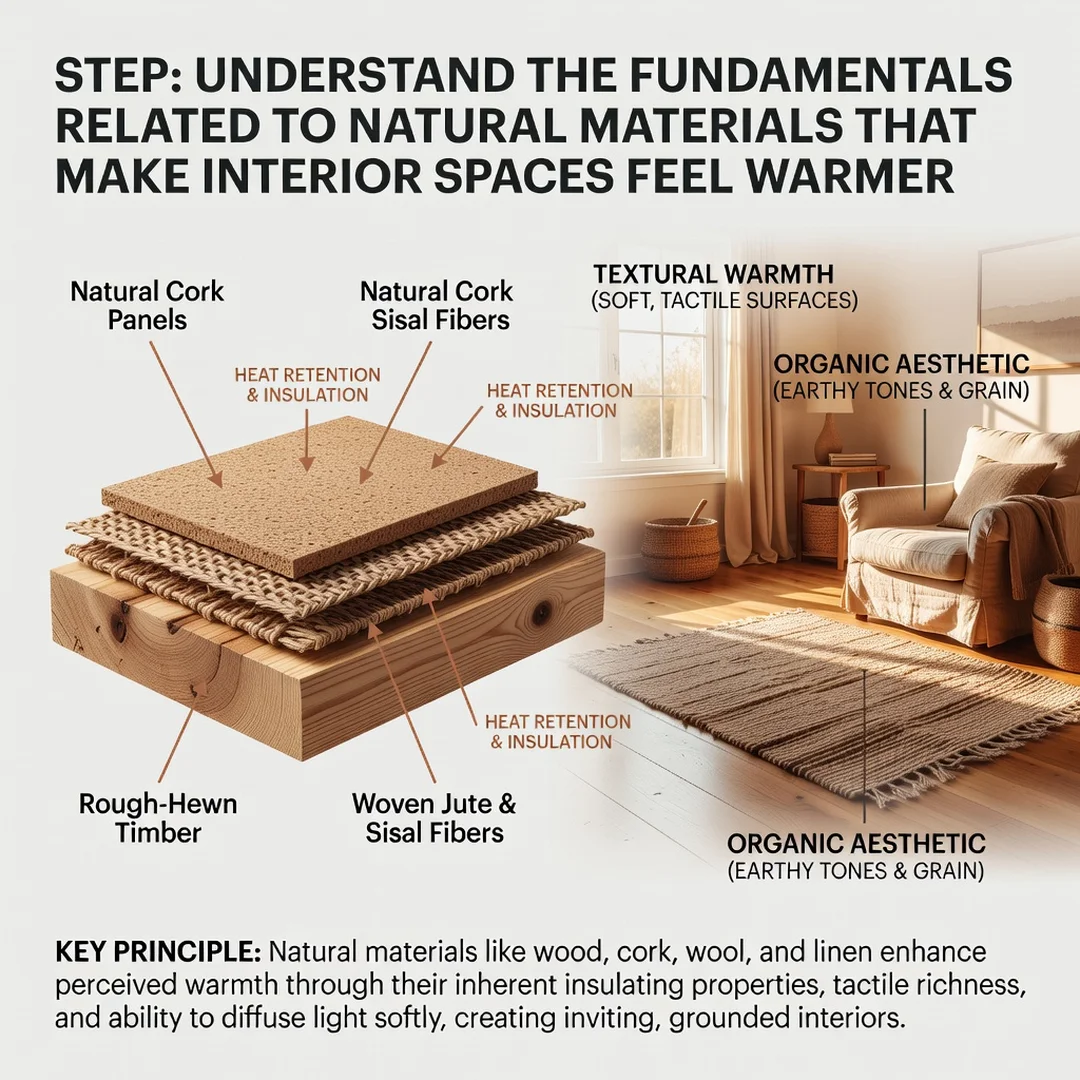
Step 1: Understand the fundamentals
Learn how texture, porosity, thermal behavior, and patina create warmth. Read about a handful of core materials, and notice how you respond to them in rooms you already visit. This groundwork prevents expensive mistakes later.
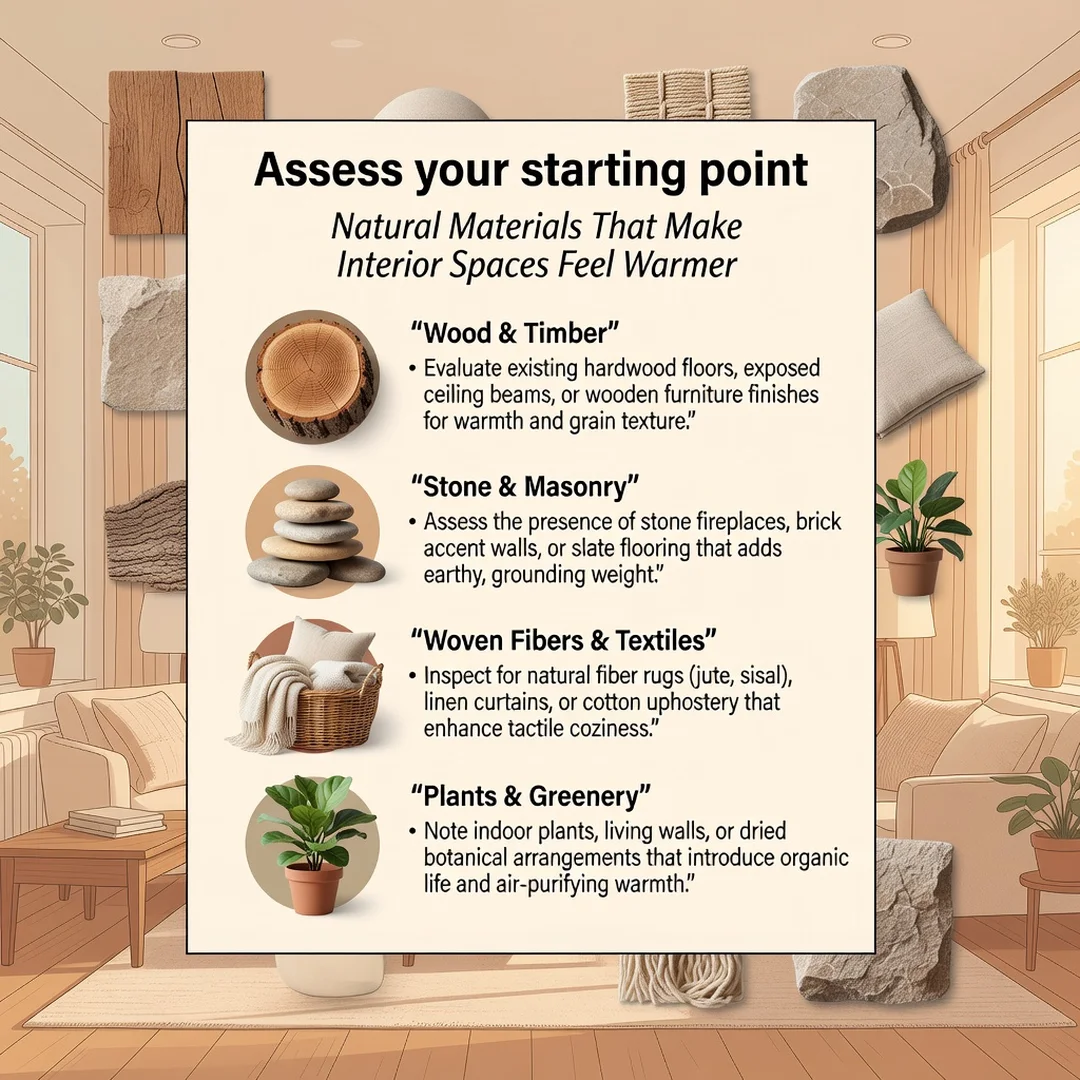
Step 2: Assess your starting point
Inventory what you already have. Note which surfaces are synthetic, which are natural, and where the room feels cold or echoing. Pay attention to light direction, room size, and existing color palette. A quick phone photo at midday and again at dusk reveals more than memory will.
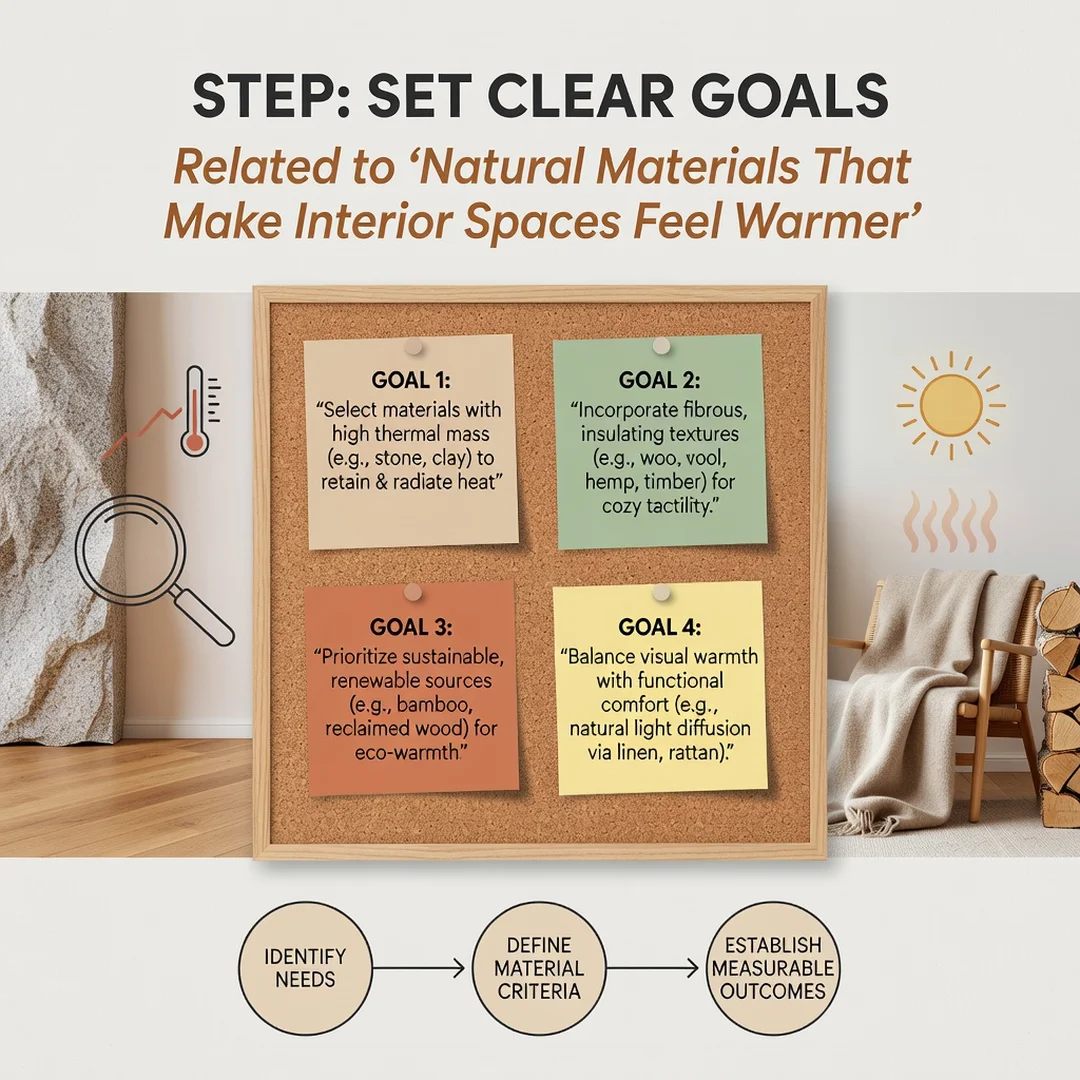
Step 3: Set clear goals
Decide what warmth means for your space. Do you want a calmer, quieter room, a more tactile one, or simply a less sterile one? Write a short list of priorities and a rough budget. Specific goals keep you from buying random objects that do not cohere.
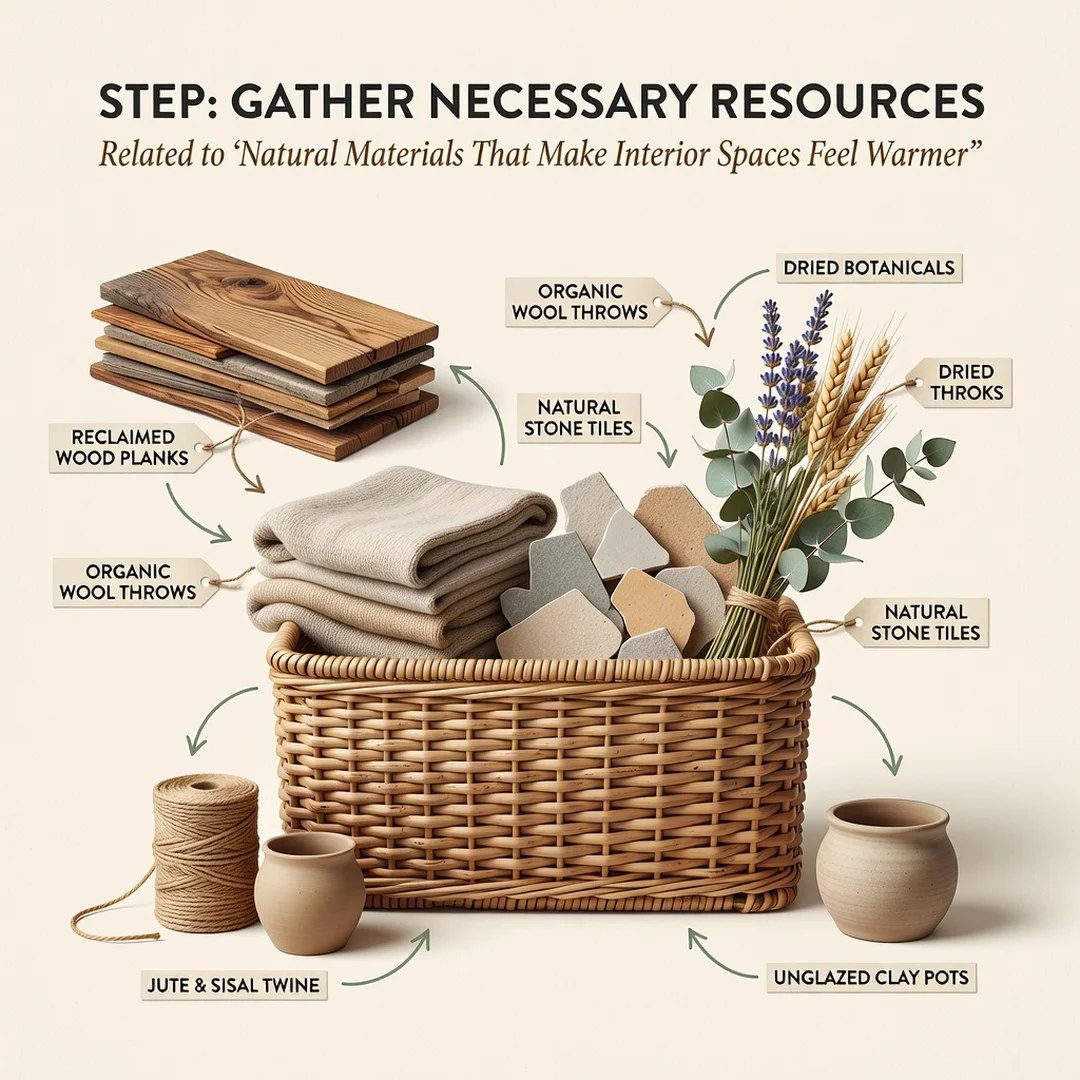
Step 4: Gather necessary resources
Collect samples of wood, fabric, stone, and fiber before purchasing in quantity. Measure your space accurately. Identify local suppliers, secondhand markets, and reclaimed-material yards, which often offer better character at lower cost. Set aside time for installation or arrangement.
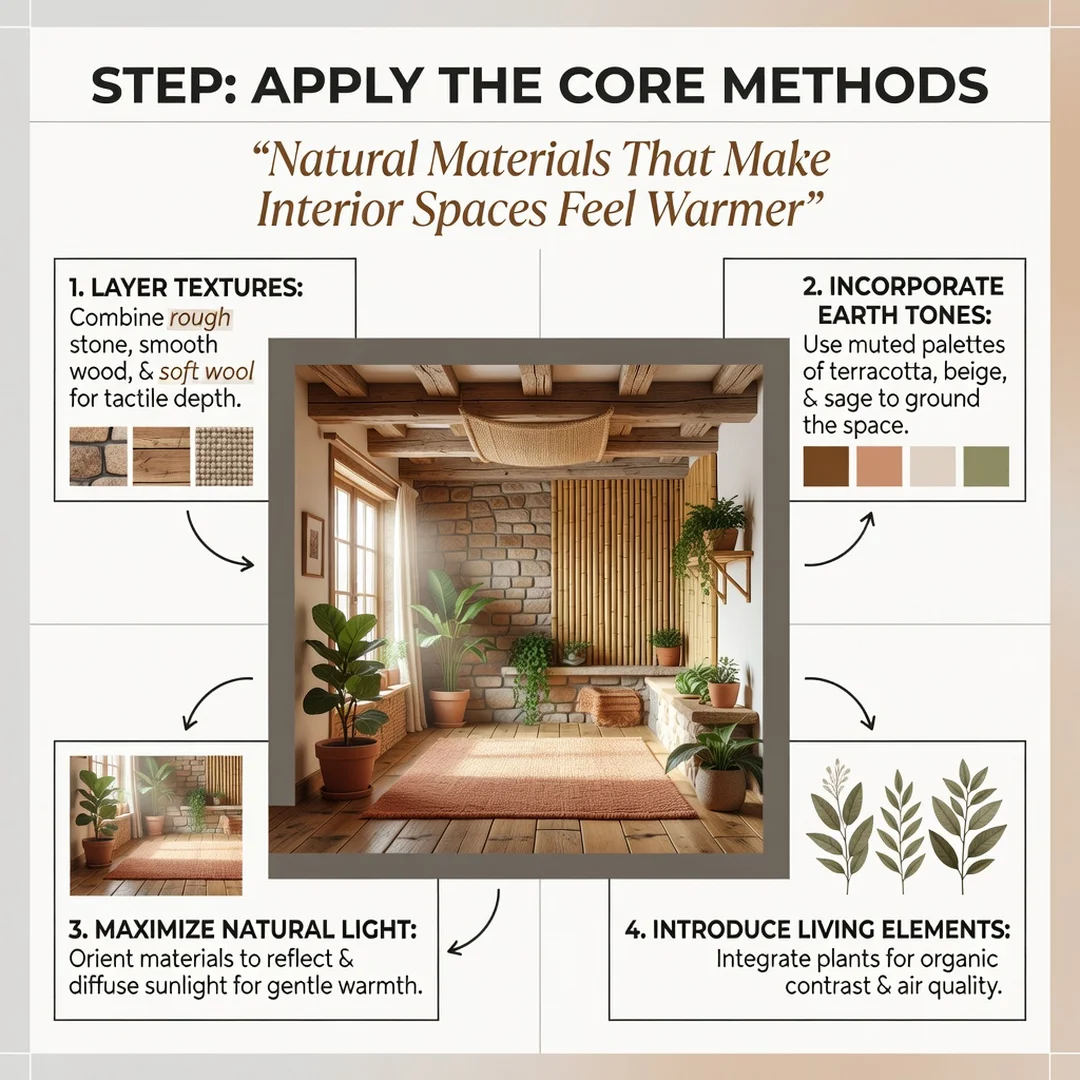
Step 5: Apply the core methods
Introduce materials in layers, starting with the largest surfaces such as floors and walls, then moving to furniture, then to textiles and accessories. Live with each layer for a few days before adding the next. Adjust based on how the room actually feels rather than how you imagined it would. Small changes, repeated over time, produce the strongest result.
FAQ
What should I know about Natural Materials That Make Interior Spaces Feel Warmer?
The main thing to understand is that warmth is multisensory. It comes from how a material feels, how it absorbs light, how it handles heat, and how it ages. You do not need to renovate an entire home; adding a wool rug, a solid wood table, or linen curtains can noticeably shift how a room feels. The key is consistency, choosing materials that share a similar tactile and visual language rather than mixing them at random.
Who is this guide for?
This guide is for anyone who wants a home that feels calmer and more inviting, whether you rent a small apartment, own a house, or are furnishing a single room. No design background is required. It is equally useful for renters who can only change soft furnishings and for homeowners planning larger updates.
Conclusion
Natural materials make interior spaces feel warmer because they engage the senses honestly: they absorb light, hold heat, soften sound, and change with age. Oak, wool, linen, rattan, clay, and stone each contribute something distinct, and the most successful rooms combine several of them in deliberate layers. Start with what you have, set clear goals, gather samples before you commit, and apply changes gradually. Reliable information and consistent habits lead to better long-term outcomes, and the same holds true for the rooms you live in. You do not need a large budget or a professional designer. You need a clear eye, a few honest materials, and the patience to let a space become warm over time.
You now have a solid foundation for Natural Materials That Make Interior Spaces Feel Warmer. Apply the best practices above and revisit this guide as your needs evolve.