
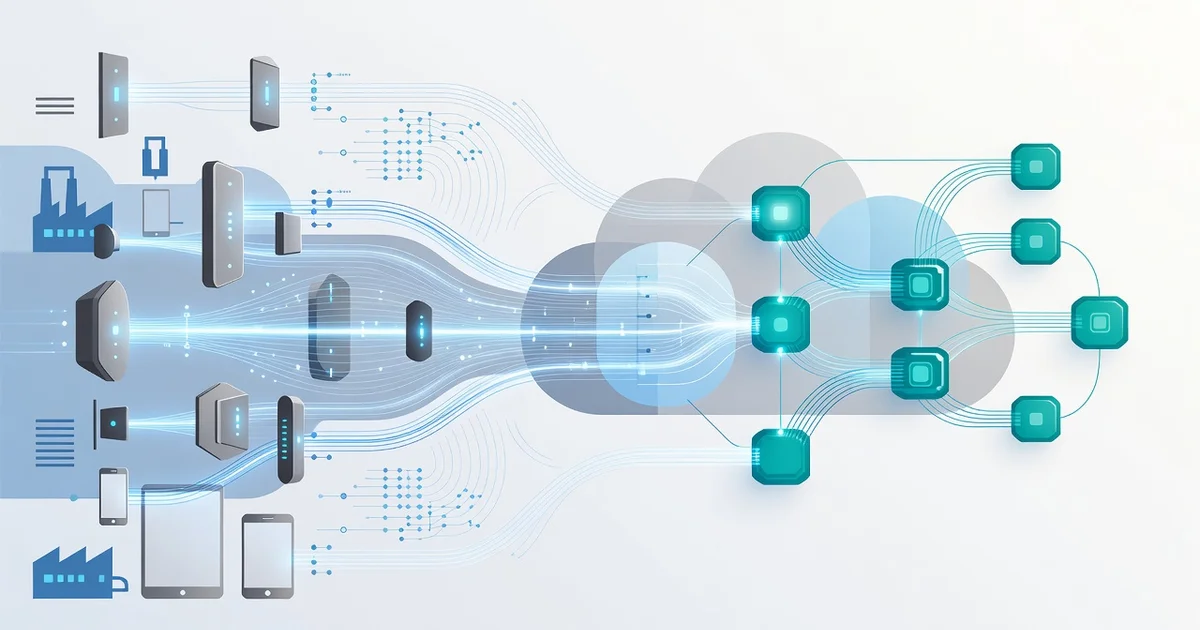
Edge computing is changing how data is processed by moving computation closer to where it’s created—whether that’s a factory floor, a retail store, or a smart city sensor. Instead of sending everything to a distant data center, edge computing handles data locally, delivering faster responses and reducing strain on networks.
So why does it matter? From real-time analytics to autonomous vehicles, edge computing enables faster decisions, lower costs, and better performance. In this article, we’ll explain what edge computing is, how it works, and why it’s becoming essential for modern businesses and technologies.
Introduction
Edge computing is one of those technology terms that gets used constantly in meetings, product brochures, and news headlines — often without a clear explanation of what it actually means. At its core, edge computing is the practice of processing data close to where it is created rather than sending everything to a distant, centralized data center. This article explores What Is Edge Computing and Why Is It Important with clear, practical guidance, so you can evaluate whether it matters for your organization or your daily work.
Understanding the fundamentals of What Is Edge Computing and Why Is It Important helps you make informed decisions. Whether you manage IT infrastructure, run a small business, or simply want to keep up with where technology is heading, grasping the basics of edge computing gives you a framework for judging new products, vendor claims, and architectural trade-offs. Reliable information and consistent habits lead to better long-term outcomes — and that principle applies just as much to technology strategy as it does to personal finance or health.
Key Concepts
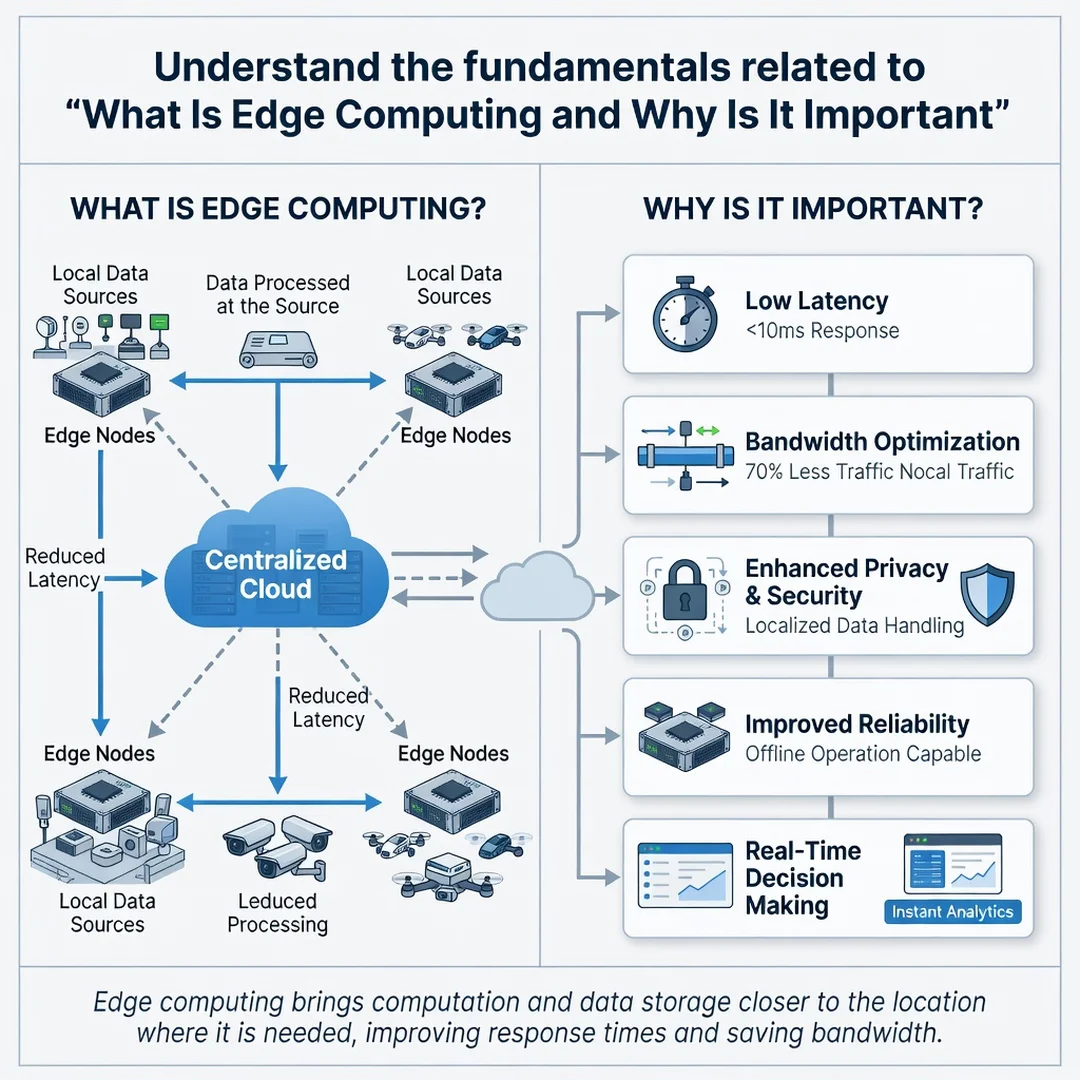
To understand edge computing, it helps to start with the opposite approach. Traditional cloud computing centralizes processing power in large data centers, sometimes hundreds or thousands of miles away. Data travels from a device or sensor to that data center, gets processed, and the result travels back. This works well for many applications, but it introduces latency, consumes bandwidth, and creates a single point of dependency.
Edge computing flips part of that model. Instead of sending everything to the center, computation happens at or near the “edge” — the physical location where data is generated. That could be a factory floor, a retail store, a cell tower, a vehicle, a hospital room, or even a smartphone.
Core terms you will encounter
- Edge device: Any hardware at the boundary of the network — sensors, cameras, gateways, industrial controllers, or user devices.
- Edge node: A small server or compute unit placed near edge devices to process data locally.
- Latency: The delay between a request and a response. Lower latency is often the primary reason organizations adopt edge computing.
- Bandwidth: The volume of data a network can carry. Processing locally reduces how much data must travel back and forth.
- Cloud-edge continuum: The idea that cloud and edge are not competitors but complementary layers of one system.
These concepts matter because they explain why edge computing is not simply “cloud computing but smaller.” It is a different architectural philosophy with its own trade-offs in cost, complexity, security, and maintenance.
Deep Dive
The importance of edge computing becomes clearer when you look at real constraints. Consider a self-driving car. If a vehicle had to send sensor data to a remote data center and wait for a response before applying the brakes, the delay could be fatal. Processing must happen in the vehicle, in milliseconds. Similarly, a manufacturing robot detecting a defect on an assembly line cannot wait for a round trip to the cloud — the product will have moved on.
Beyond speed, there are three other drivers:
- Data volume: A single smart factory can generate terabytes of data per day. Sending all of it to the cloud is expensive and often unnecessary. Filtering and analyzing at the edge reduces cost dramatically.
- Reliability: If a network connection fails, edge systems can keep operating locally. Centralized systems may stop entirely.
- Privacy and compliance: Some data — medical records, personal video feeds, financial transactions — may be subject to regulations that restrict where it can be stored or transmitted. Processing locally can simplify compliance.
That said, edge computing is not a universal solution. Edge nodes are harder to secure physically, harder to update, and often less powerful than centralized servers. The most effective architectures treat edge and cloud as a team: time-sensitive or sensitive processing happens at the edge, while long-term analytics, model training, and archival storage happen in the cloud.
You will also see edge computing described alongside related terms like IoT (Internet of Things), 5G, and fog computing. IoT refers to the network of connected devices; edge computing is how those devices process data intelligently. 5G provides the fast, low-latency connectivity that makes many edge deployments practical. Fog computing is an older, similar concept that generally refers to a layer between the edge and the cloud. Understanding these relationships prevents confusion when vendors use the terms interchangeably.
Best Practices
If you are considering edge computing for your organization, the following habits tend to produce better results. Reliable information and consistent habits lead to better long-term outcomes, and edge deployments are no exception.
- Start with the problem, not the technology. Define the latency, bandwidth, or compliance requirement you are trying to solve. If a standard cloud solution meets your needs, it is usually simpler and cheaper.
- Design for remote management. Edge nodes are often in physically inconvenient places. Plan for remote monitoring, updates, and recovery from day one.
- Prioritize security at every layer. Encrypt data at rest and in transit, use hardware-based trust where available, and assume physical access by unauthorized people is possible.
- Standardize your hardware and software. A fleet of diverse, bespoke edge devices becomes unmanageable quickly. Choose consistent platforms and automation tools.
- Plan the data flow deliberately. Decide what stays at the edge, what gets summarized, and what gets sent to the cloud. Avoid sending raw data upstream by default.
- Measure outcomes. Track latency, uptime, bandwidth savings, and cost. Without measurement, you cannot tell whether the edge investment is paying off.
Following a structured process makes these best practices easier to apply consistently.
A step-by-step approach
Step 1: Understand the fundamentals
Before making any decisions, spend time learning how edge computing differs from cloud computing, what latency and bandwidth really mean in your context, and which use cases genuinely benefit from local processing. Talk to people who have deployed similar systems. Reliable information at this stage prevents expensive mistakes later.
Step 2: Assess your starting point
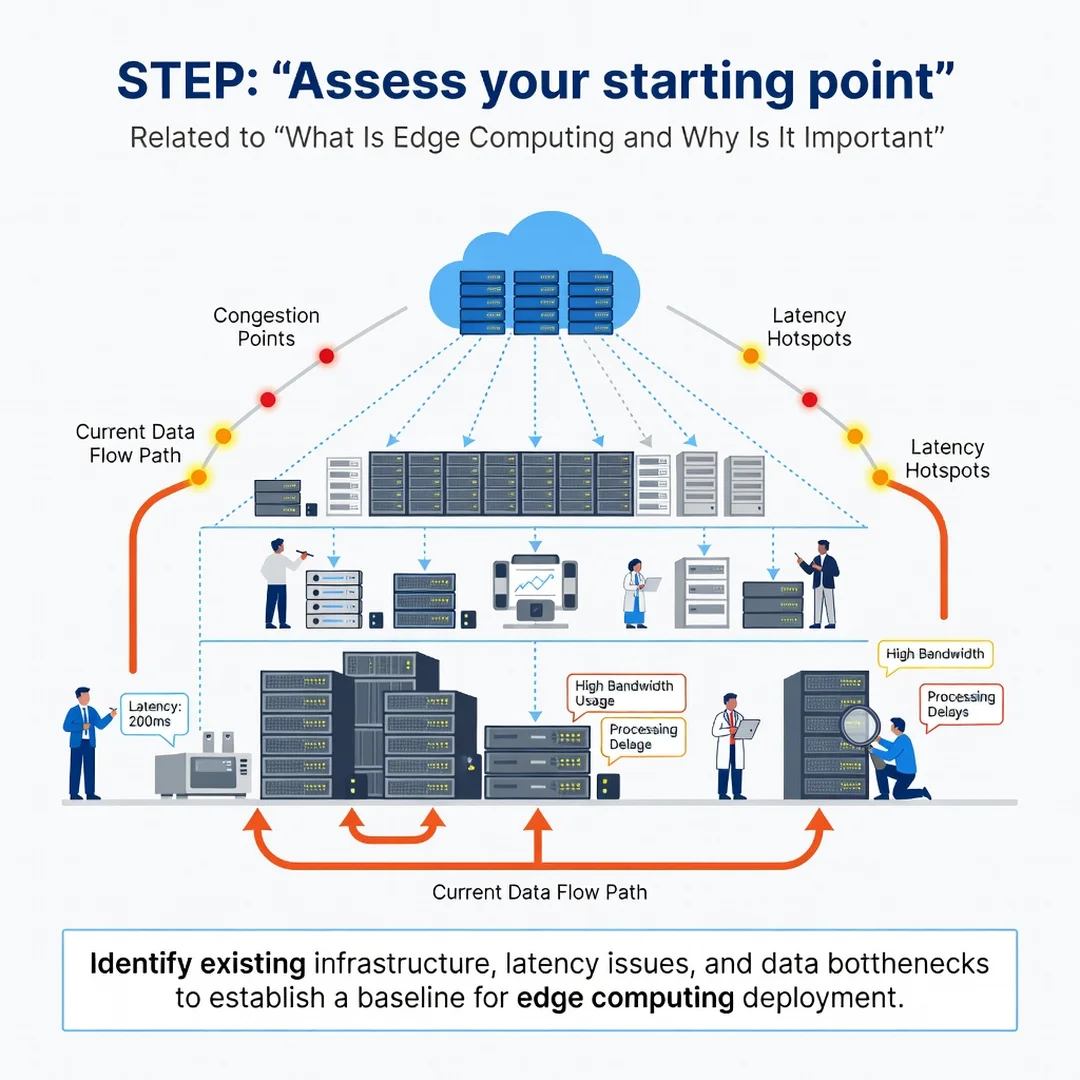
Inventory your current infrastructure, data sources, and network capabilities. Identify where data is generated, how much of it there is, and how long it takes to travel to your current processing location. Note any existing pain points — slow applications, high bandwidth bills, or compliance concerns — that edge computing might address.
Step 3: Set clear goals
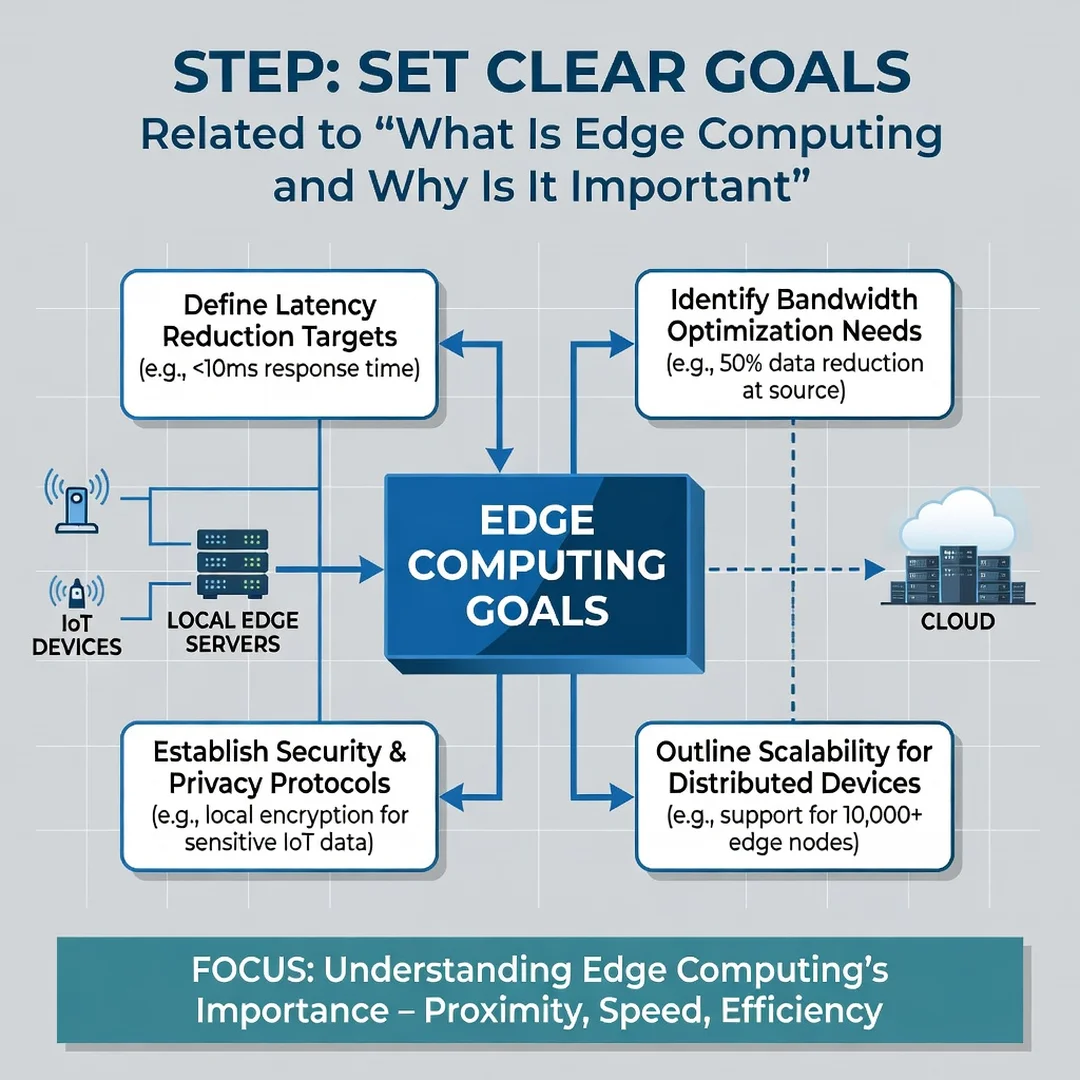
Translate your findings into specific, measurable objectives. Instead of “improve performance,” aim for “reduce processing latency from 200 milliseconds to under 20 milliseconds” or “cut cloud data transfer costs by 40 percent.” Clear goals guide technology choices and make it possible to judge success.
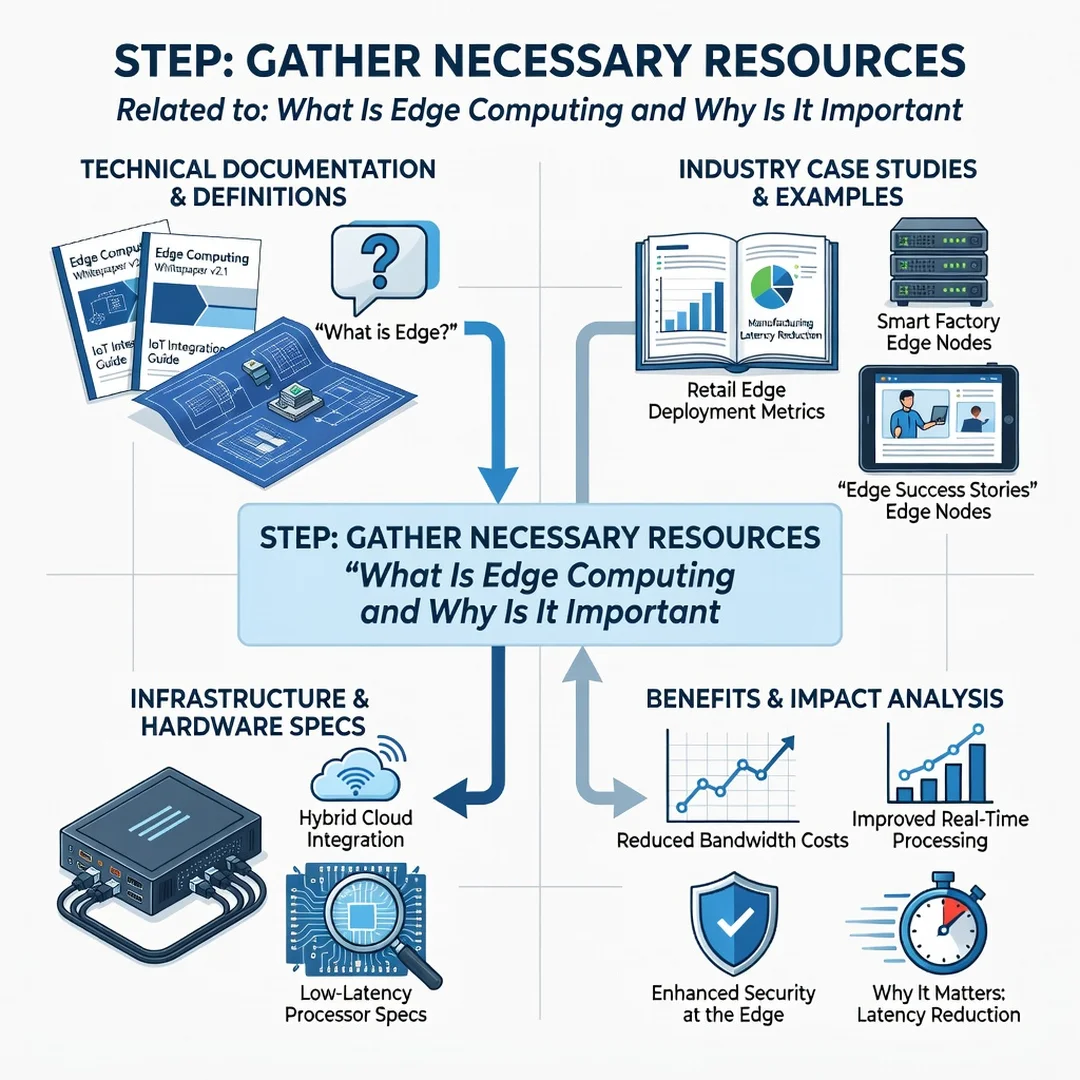
Step 4: Gather necessary resources
Determine what you need in terms of hardware, connectivity, software platforms, security tools, and — critically — people with the right skills. Edge deployments often require closer collaboration between IT, operations, and security teams than traditional cloud projects.
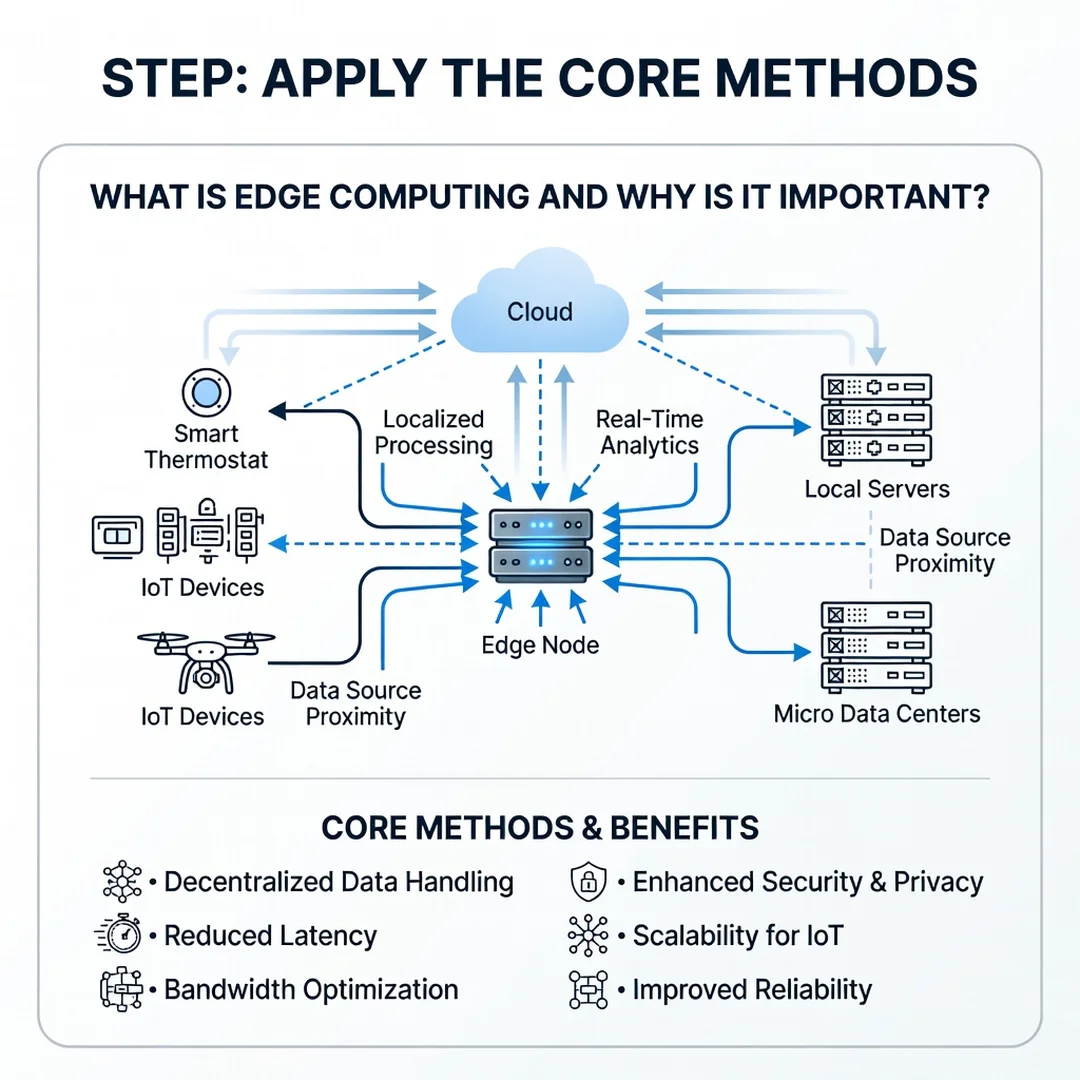
Step 5: Apply the core methods
Start with a pilot project in a controlled environment. Deploy edge nodes, configure local processing, and connect them to your existing cloud or data center systems. Monitor results against your goals, adjust as needed, and only then scale to additional locations. Iterating in small steps reduces risk and builds internal expertise.
FAQ
What should I know about What Is Edge Computing and Why Is It Important?
The most important thing to know is that edge computing is a response to real physical constraints: the speed of light, limited network bandwidth, and data privacy rules. It moves processing closer to data sources to reduce latency, save bandwidth, improve reliability, and address compliance. It is not a replacement for the cloud but a complement to it. Understanding the fundamentals of What Is Edge Computing and Why Is It Important helps you make informed decisions about whether, when, and how to adopt it.
Who is this guide for?
This guide is written for a general audience — business leaders, IT professionals, students, and curious readers who want a clear, jargon-free explanation of edge computing. It is especially useful for anyone evaluating technology investments, planning digital transformation projects, or trying to understand how connected devices and modern networks actually work together.
Conclusion
Edge computing is best understood not as a single product but as a way of organizing where computation happens. By processing data closer to its source, organizations can achieve lower latency,.
You now have a solid foundation for What Is Edge Computing and Why Is It Important. Apply the best practices above and revisit this guide as your needs evolve.