
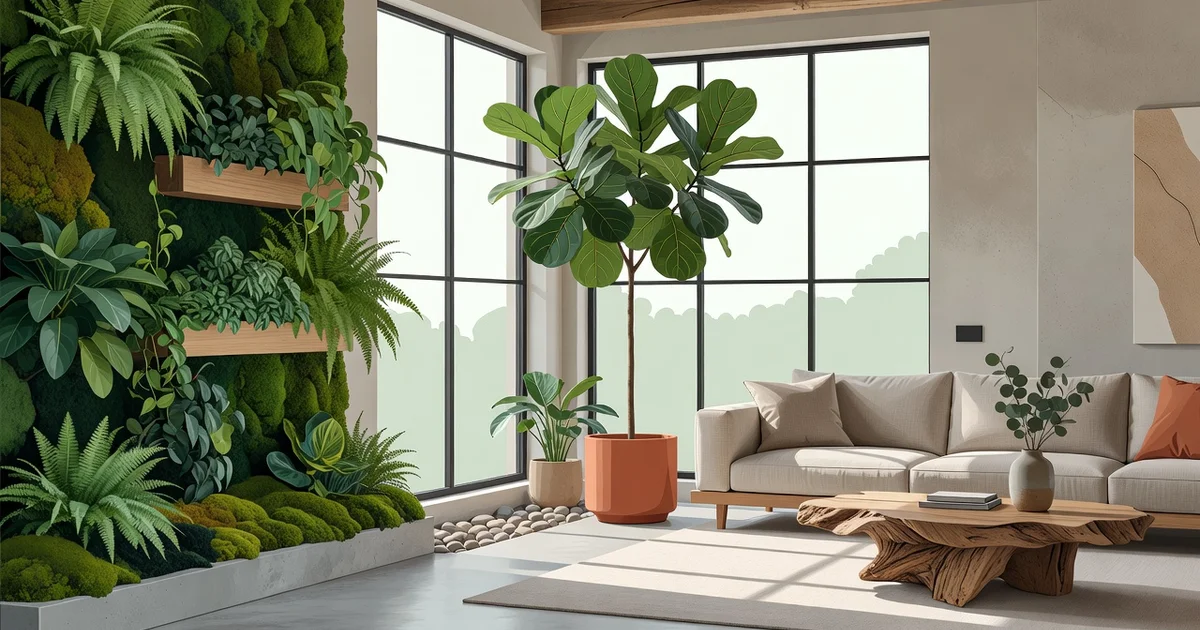
Modern homes are admired for their clean lines, open spaces, and uncluttered look. Yet all that sleek minimalism can sometimes feel cold or impersonal. The good news is that you don’t have to choose between contemporary style and warmth. Learning how to bring natural elements into a modern home lets you enjoy the best of both worlds.
From wood and stone to plants and natural light, organic touches soften hard edges and add texture, calm, and character. In this guide, you’ll find clear, actionable ideas to weave nature into your space—without sacrificing the modern aesthetic you love.
Introduction
Modern homes often prioritize clean lines, neutral palettes, and sleek materials. While this aesthetic feels calm and uncluttered, it can also feel a little cold or sterile. Bringing natural elements into a modern home is one of the simplest ways to add warmth, texture, and a sense of calm without sacrificing a contemporary look. This article explores how to bring natural elements into a modern home with clear, practical guidance that you can apply room by room.
You do not need a complete renovation or a large budget. Small, intentional changes—a wood bowl, a linen throw, a potted plant—can shift the entire mood of a space. The goal is balance: keep the clean lines you love while layering in materials and forms that feel organic and alive.
Key Concepts
Before you start shopping or rearranging, it helps to understand a few core ideas. Understanding the fundamentals of how to bring natural elements into a modern home helps you make informed decisions rather than following trends blindly.
- Texture over clutter: Natural materials add visual and tactile richness. A rough stone tray or a woven basket introduces contrast to smooth surfaces without adding mess.
- Warmth through materials: Wood, wool, linen, jute, clay, and stone carry a natural warmth that glass, chrome, and glossy laminate do not.
- Biophilic connection: Humans respond positively to natural light, plants, and organic shapes. Even small nods—a plant, a view of the sky, a wooden stool—can reduce stress.
- Restraint: Modern design thrives on editing. One large statement piece (a live-edge coffee table, a stone sink) often works better than ten small decorations.
- Consistency: Reliable information and consistent habits lead to better long-term outcomes. The same applies to your home: a few repeated natural materials throughout the house create cohesion.
Deep Dive
Natural elements fall into several categories: materials, light, plants, and scent. Each plays a distinct role in a modern interior.
Materials
Wood is the most versatile natural material. In a modern home, choose finishes like white oak, walnut, or ash with a matte or oiled surface rather than high-gloss. Use wood for flooring, shelving, a dining table, or even a single accent chair. Stone—marble, travertine, slate, or granite—adds weight and permanence. A stone backsplash or a stone coffee table can anchor a room. Natural fibers such as linen, cotton, wool, jute, and sisal work well for upholstery, curtains, rugs, and throws. They soften sound and add a relaxed feel.
Light
Modern homes often have large windows. Maximize natural light by keeping window treatments minimal—sheer linen curtains or simple roller shades. Avoid heavy valances or dark drapes that block the sun. Mirrors placed opposite windows can bounce light deeper into the room.
Plants
Living plants are the most direct natural element. Choose varieties that suit your light levels: snake plants and ZZ plants for low light; fiddle-leaf figs and monsteras for bright, indirect light. Group plants in odd numbers and vary heights for a natural look. Terracotta or ceramic pots feel more organic than plastic.
Scent and sound
Natural elements also include what you smell and hear. Open windows for fresh air. Use essential oil diffusers with cedar, lavender, or eucalyptus. A small indoor fountain or a white-noise machine that mimics rain can add a soothing auditory layer.
Best Practices
These habits and guidelines will help you integrate natural elements without overwhelming your modern aesthetic.
- Start with one room: Choose the room where you spend the most time—often the living room or bedroom. Apply changes there first, then expand.
- Follow the 80/20 rule: Keep roughly 80% of your existing modern elements and introduce 20% natural elements. This prevents a jarring shift.
- Layer textures: Combine at least three natural textures in a room—for example, a wool rug, a linen sofa, and a wooden side table.
- Use real materials when possible: Faux wood or plastic plants can work in a pinch, but real materials age better and feel more authentic.
- Edit regularly: Natural elements can accumulate. Once a month, remove anything that feels unnecessary or dusty.
- Prioritize daylight: Clean windows, trim outdoor bushes, and avoid blocking light with tall furniture.
- Choose timeless over trendy: A jute rug or a stone vase will look good for years. Neon-colored dried grass may not.
Step-by-Step Guide
Follow these five steps to bring natural elements into your modern home in a structured, manageable way.
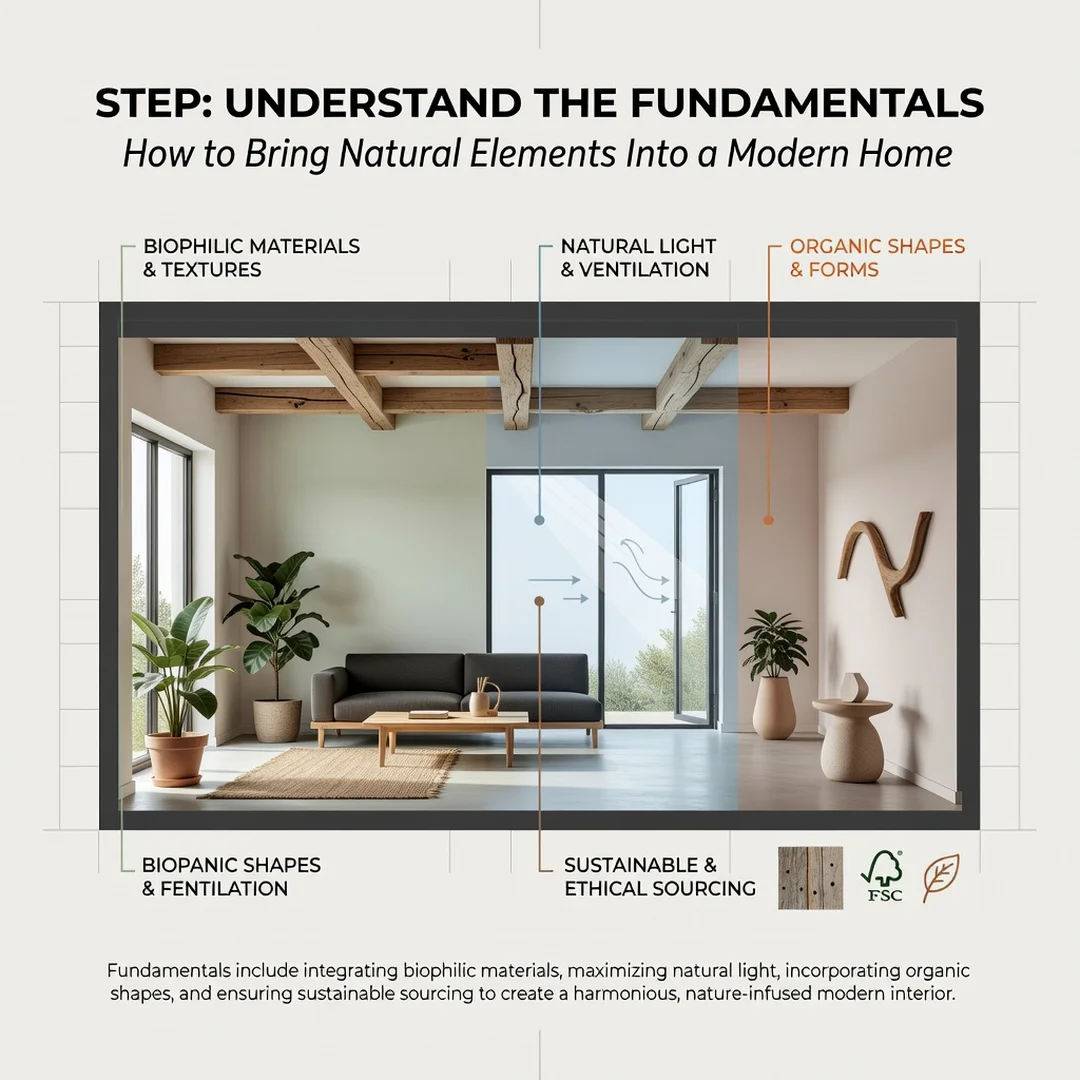
Step 1: Understand the fundamentals
Before making changes, learn the basic categories: materials (wood, stone, fiber), light, plants, and scent. Read one or two reliable articles or books on biophilic design. Understand that the goal is not to turn your modern home into a rustic cabin, but to add warmth and organic contrast. Knowing the fundamentals helps you avoid expensive mistakes and choose elements that truly fit.

Step 2: Assess your starting point
Walk through your home with a notebook or phone. Note which rooms feel cold, echoey, or visually flat. Identify existing natural elements—maybe you already have a wooden floor or a wool throw. Also note constraints: light levels (which direction do windows face?), humidity (affects wood and plants), and pets or small children (some plants are toxic, some fibers stain easily). A honest assessment tells you where to focus first.
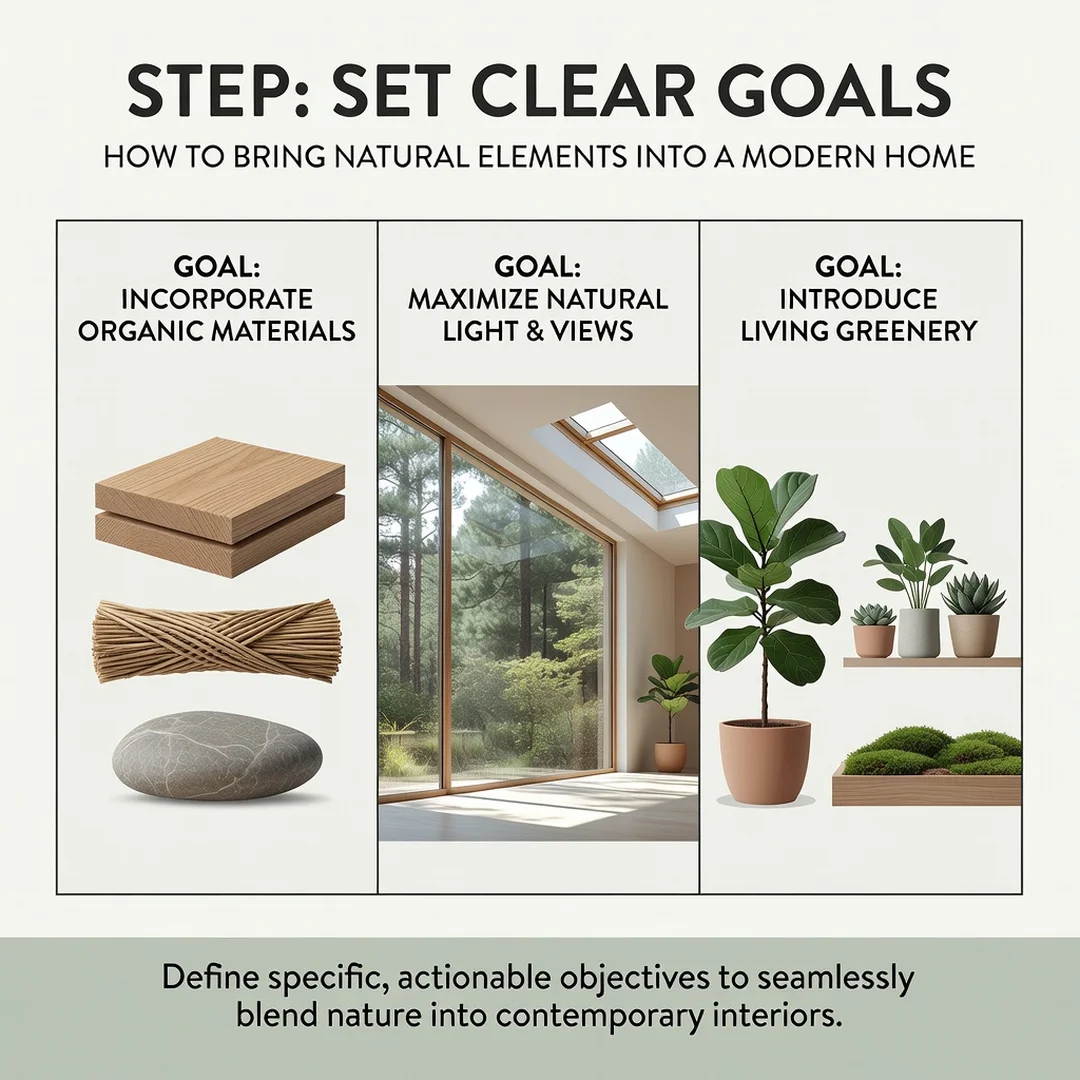
Step 3: Set clear goals
Define what success looks like. For example: “Add three natural textures to the living room by next month” or “Replace plastic blinds with linen curtains in the bedroom.” Goals should be specific, measurable, and realistic. Write them down. You might also set a budget—natural materials can range from free (a fallen branch as a decor piece) to expensive (a marble countertop). Clear goals keep you from impulse buying.
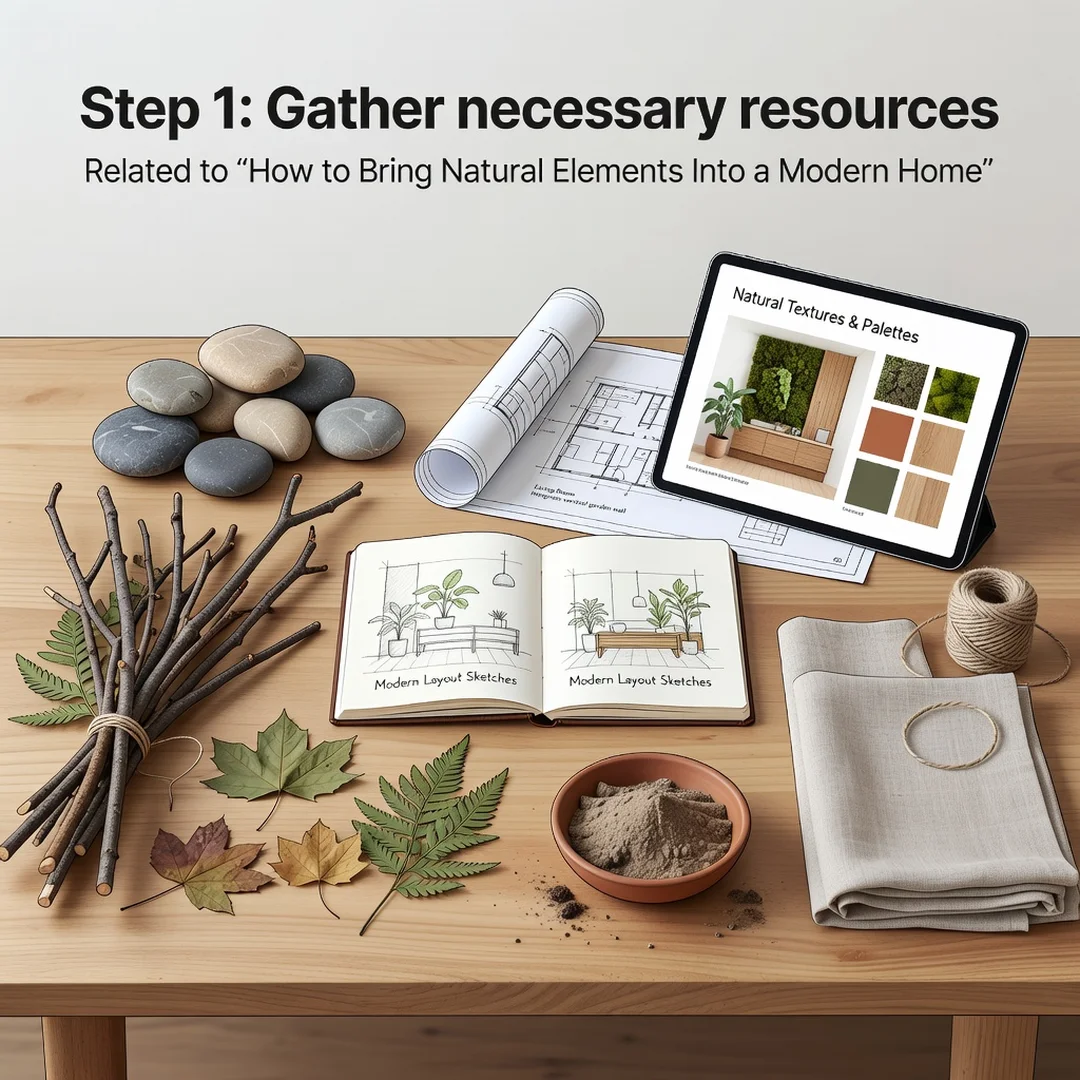
Step 4: Gather necessary resources
Collect what you need before you start rearranging. This might include: a measuring tape, a list of local plant nurseries, online shops for linen or jute, and basic care tools (watering can, wood oil, stone sealer). If you plan to install shelves or hang art, gather tools. If you are buying plants, research their light and water needs first. Having everything ready prevents half-finished projects.
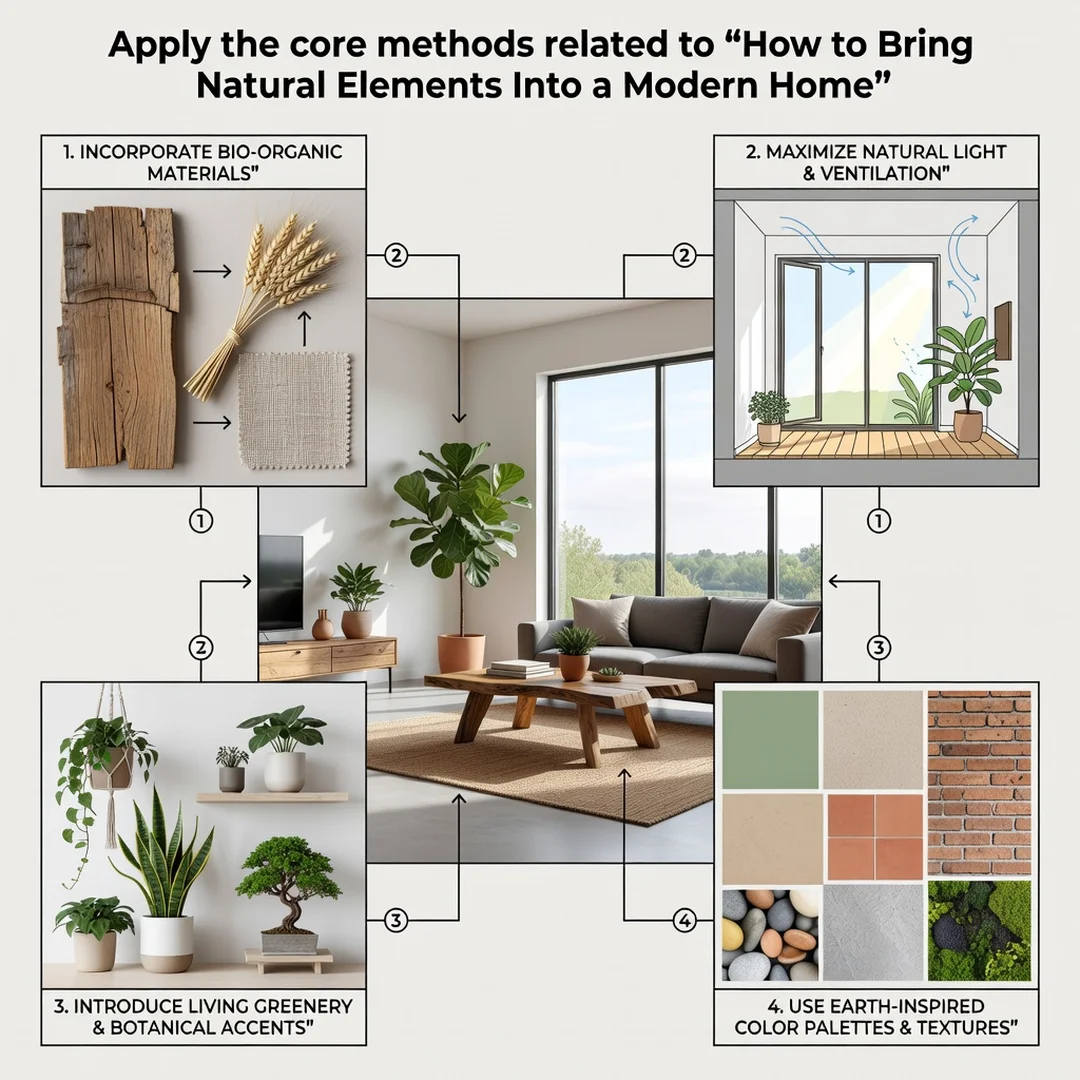
Step 5: Apply the core methods
Now execute. Start with the easiest, highest-impact changes: open curtains, add a large potted plant, swap a plastic lampshade for a linen one. Then move to medium changes: lay a jute rug, replace a glass coffee table with a wooden one, add a stone tray. Finally, consider larger changes: install a wood ceiling beam or a stone backsplash. After each change, live with it for a week before adding more. This gradual approach lets you fine-tune and avoid overdoing it.
FAQ
What should I know about How to Bring Natural Elements Into a Modern Home?
The most important thing to know is that natural elements work best when they are intentional and restrained. You do not need many items—a few well-chosen pieces in natural materials, plus good daylight and one or two plants, can transform a room. Also understand that natural materials require some care: wood needs occasional oiling, stone can stain, and plants need water and light. Finally, know that consistency matters. Repeating similar materials (e.g., oak and linen) across rooms creates a cohesive, calming effect rather than a random collection.
Who is this guide for?
This guide is for anyone who lives in a modern home—whether it is a new build, a renovated apartment, or a minimalist house—and wants to add warmth and organic character without abandoning clean lines. It is also for renters who cannot make structural changes, since most suggestions (plants, textiles, lighting, small furniture swaps) are temporary and reversible. If you are a homeowner planning a larger project, the same principles apply at a bigger scale.
Conclusion
Bringing natural elements into a modern home is a practical, rewarding process. By understanding the fundamentals, assessing your space, setting clear goals, gathering resources, and applying changes step by step, you can create a home that feels both contemporary and deeply comfortable. Remember that reliable information and consistent habits lead to better long-term outcomes—start small, stay consistent, and let your home evolve naturally.
You now have a solid foundation for How to Bring Natural Elements Into a Modern Home. Apply the best practices above and revisit this guide as your needs evolve.